Cardsplain
On this page

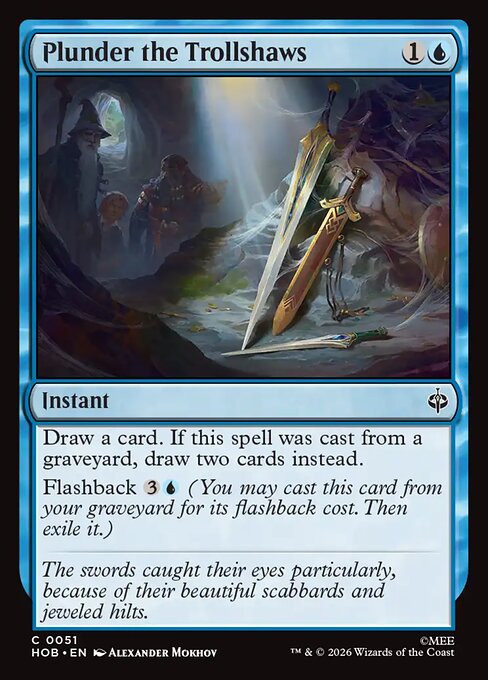
Burn and Draw (blue-red) is a middling deck and a rare one. It won 55.2% over 4,886 games, against 57.6% over 85,459 games for Goblin Army, the most-played deck, and 56.4% over 58,594 games for Draw Two, the main blue deck. Only cards drawn in enough of its games get a win rate here at all, and even the most-played spell, Plunder the Trollshaws, has only 2,507 games in this deck behind it.

This deck is rare because The Hobbit gives five decks a and a dual land (Draw Two, Goblin Army, Dwarves & Equipment, Ferocious Wolves, Elf Landfall), and blue and red get neither. Nothing in the set is built for it, so the deck is good blue cards plus good red cards. Blue's synergy cards pull toward Draw Two and red's toward Goblin Army and Dwarves & Equipment.

End up here anyway when red keeps coming (Pinecone Strike, Burn, Burn, Tree and Fern, Gandalf, Spark Starter) and blue's good cards come late, while black dries up. In that draft this is a solid deck, because its red removal is the same removal Goblin Army wins with.

Deck win rate 55.2% −1.0 vs average 4,886 games

Compared with the set average (56.2%). Win rates from 17Lands.

How a game goes

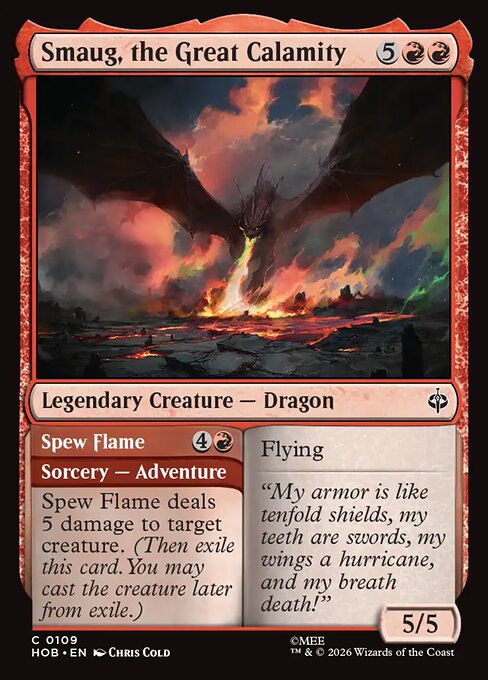
Spew Flame and Pinecone Strike kill creatures while Plunder the Trollshaws draws you three cards over two casts, the second with .

  1. Early turns

    Turns 1–3: you are not the attacker. Play a that blocks or grows (Óin the Brave, Master's Councillors, Bothersome Noisemaker) and keep Pinecone Strike for their best early creature. The exception is Bilbo, Luckwearer on turn 2. He can't be blocked, so attack with him every turn.

  2. Middle turns

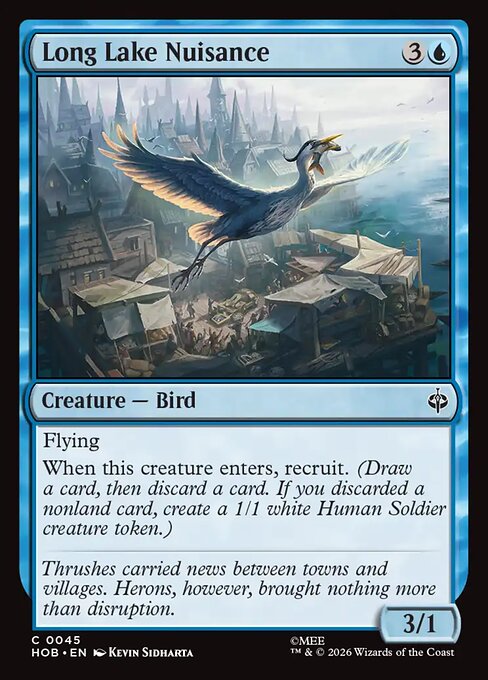
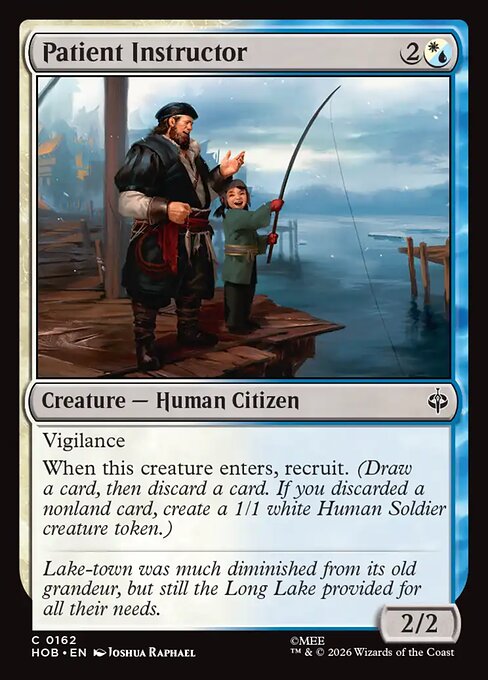
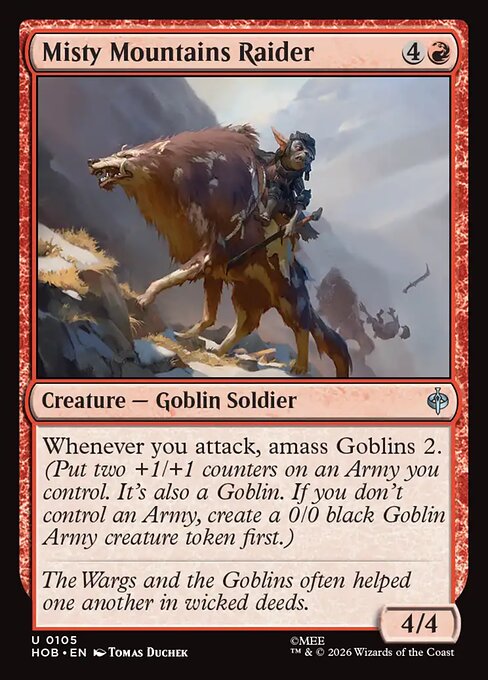
    Turns 4–6: each turn either kill their best creature (Burn, Burn, Tree and Fern, Spew Flame, Uneasy Partings on an attacker) or add a body (Long Lake Nuisance, Patient Instructor, Misty Mountains Raider). Use and Óin's ability to discard Plunder the Trollshaws or Tidings of War, then cast them from your later with .

  3. Late game

    Turn 7+: you should have more cards than they do. Gandalf, Spark Starter clears small creatures, Smaug, the Great Calamity comes out of as a 5/5 after Spew Flame, and Plunder the Trollshaws draws two. Win in the air or with an grown by Misty Mountains Raider and Bothersome Noisemaker.

Adventures (two cards in one)

This deck has no mechanic of its own, so it wins the way control decks do. It trades one card for one of theirs and still has cards left when they run out. are the cleanest way to get two cards out of one.

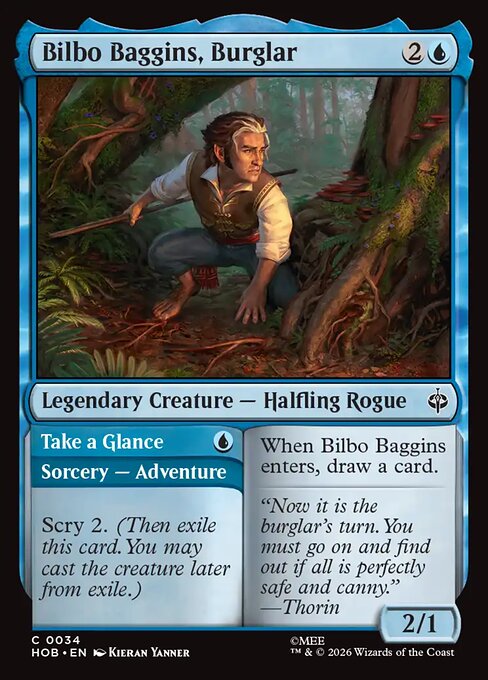
An Adventure card is a creature with a small spell printed beside it. From your hand you choose which half to cast. If you cast the spell half, it takes effect and then the card goes into instead of your . Later you may cast the creature from exile. If you cast the creature first, the spell half is gone for good. Example: Smaug, the Great Calamity // Spew Flame. For , Spew Flame is a that deals 5 damage to target creature. Later, for , you cast Smaug, the Great Calamity, a Dragon, from exile. Bilbo Baggins, Burglar works the same way. You cast Take a Glance ( 2) for , then Bilbo for , and he draws a card when he enters.

Smaug, the Great Calamity
Spew Flame is the spell half and Smaug, the Great Calamity is the creature half of the same card.

The spell half is a noncreature spell, so casting it triggers Bothersome Noisemaker (casting the creature later doesn't). The card only goes to exile if the spell . If Spew Flame's target or leaves in response, Spew Flame goes to the graveyard and you never get the Dragon.

The deck's other work on the same idea. (Plunder the Trollshaws, Tidings of War) lets you cast a card a second time from your graveyard, and a (Burn, Burn, Tree and Fern) has an effect each turn for four turns. (Long Lake Nuisance, Patient Instructor) draws a card, then discards one, and a nonland discard also makes a 1/1 Human Soldier , so discarding a flashback card to it pays twice.

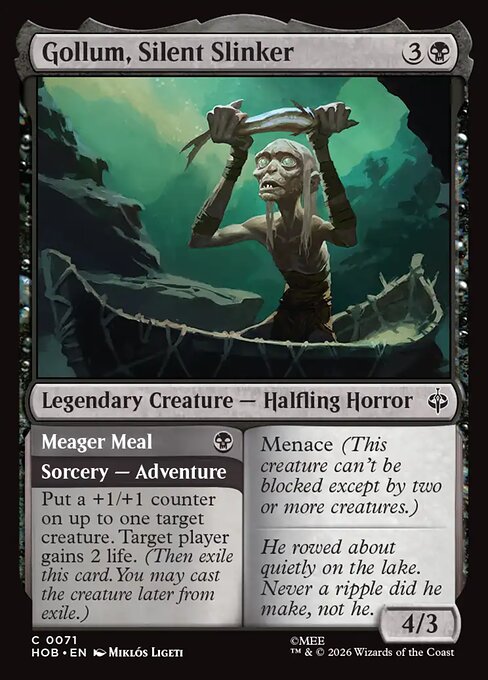
Step 1 of 3. Gollum, Silent Slinker is one card with two halves: the creature (4 mana, 4/3 menace) and a small spell, Meager Meal (1 mana: a +1/+1 counter on a creature, and a player gains 2 life). You can cast either half from your hand. You have priority.

Your turn, second main phase.
Opponent 20 life
  • No permanents
You 20 life has
  • 2/2
Your hand

Key cards

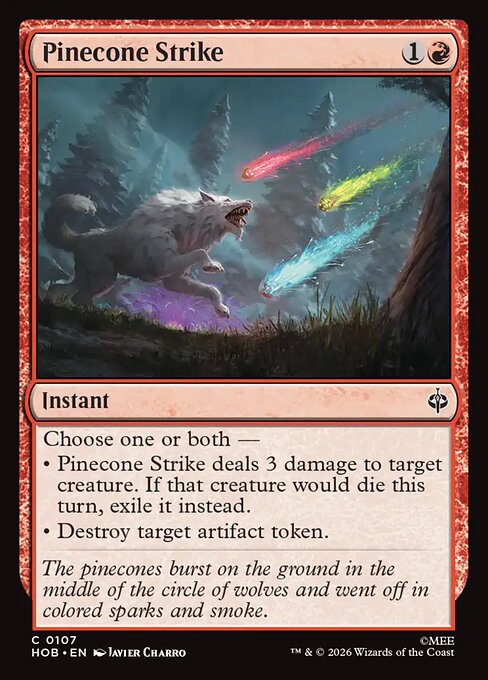
  • Pinecone Strike

    Pinecone Strike

    common Instant

    Removal

    Why it works

    Three damage at speed for 2 mana kills most 2- and and plenty of bigger creatures. If that creature would die this turn, it is instead, so triggers like Fearsome Goblin Pair's never happen. The other mode destroys an ( , Axe, Stone Boulder), and you may choose both modes at once.

    How to play it and the numbers

    How to play it

    Hold it for their turn. Kill an attacker, or kill a creature in response to an equip payment, so the mana is wasted and the stays where it was. Facing a creature and an , take both for the same 2 mana, which is why you wait for Long-Bodied Grey Dog's to arrive before you aim at the Dog. A 1/1 token is worth the Strike only when it is about to kill you.

    This is red's best common and you should take it highly.

    Win rates

    Win rate when drawn () in Burn and Draw decks
    60.3% +0.9 vs all decks 2,434 games
    Win rate when drawn () in all decks
    59.4% 55,706 games

    Win rates from 17Lands.

    Replacements

    If you don't see Pinecone Strike, these do the same job: removal.
    Win rates from .
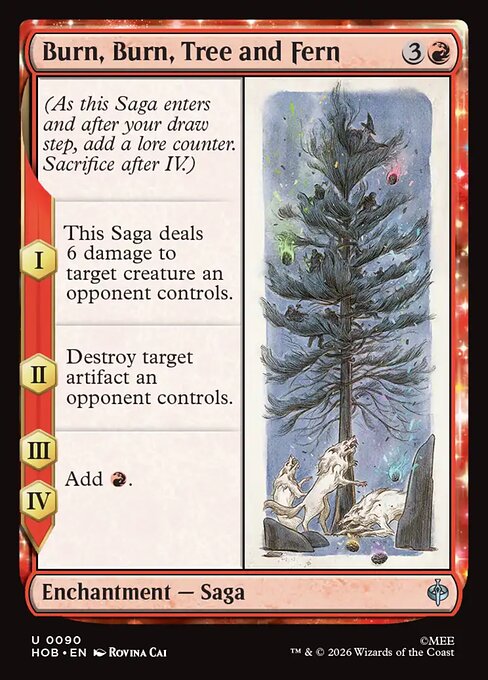
  • Burn, Burn, Tree and Fern

    Burn, Burn, Tree and Fern

    uncommon Enchantment — Saga

    Removal

    Why it works

    Chapter I deals 6 damage to a creature an opponent controls the turn you cast the , enough for almost anything they play. Chapter II destroys one of their (, a , even The Arkenstone). Chapters III and IV each add , which ramps you toward Gandalf, Spark Starter and Smaug, the Great Calamity, and the Saga counts toward Óin's .

    How to play it and the numbers

    How to play it

    Wait until they have a creature worth 6 damage, because chapter I needs a target. The from chapters III and IV arrives in your first main phase and empties when that phase ends, so spend it before combat. On turn 4 it sets up 7 mana for Smaug, the Great Calamity on turn 6, as long as you keep making land drops.

    Four mana for 6 damage is a very reasonable burn spell

    Win rates

    Win rate when drawn () in Burn and Draw decks
    59.7% −0.4 vs all decks 1,103 games
    Win rate when drawn () in all decks
    60.1% 25,422 games

    Win rates from 17Lands.

    Replacements

    If you don't see Burn, Burn, Tree and Fern, these do the same job: removal.

    Win rates from .
  • Smaug, the Great Calamity // Spew Flame

    Smaug, the Great Calamity // Spew Flame

    common Legendary Creature — Dragon // Sorcery — Adventure

    Removal

    Why it works

    Five damage kills almost every common creature, and the Dragon waiting in gives you a 5/5 for the late game. This deck gets more out of it than most, because its card draw keeps games going long enough to find a seventh land.

    How to play it and the numbers

    How to play it

    Pinecone Strike already handles toughness 3, so save Spew Flame for the creatures it can't kill. Seven lands is a lot to ask of a 17-land deck, so count on the 5 damage and treat the Dragon as a bonus. The lets you keep only one Smaug, the Great Calamity on the battlefield, but a second copy's Spew Flame is still full value.

    It's hard to get solid at the common level, and this very much is one, despite the amount of mana it costs.

    Win rates

    Win rate when drawn () in Burn and Draw decks
    58.2% +1.5 vs all decks 1,508 games
    Win rate when drawn () in all decks
    56.7% 33,601 games

    Win rates from 17Lands.

    Replacements

    If you don't see Smaug, the Great Calamity, these do the same job: removal.

    Win rates from .
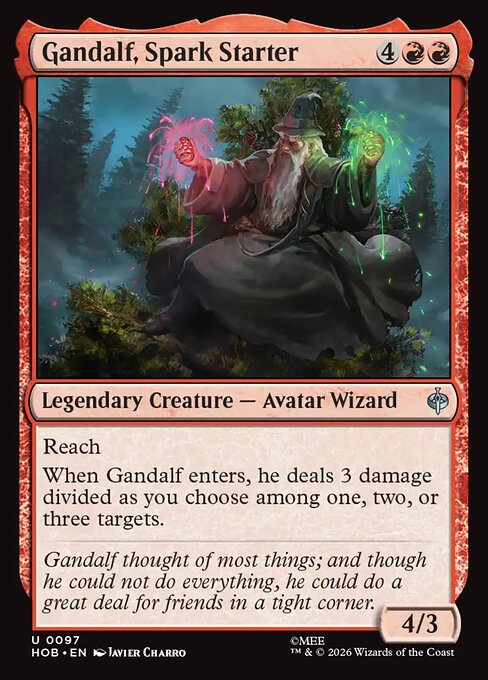
  • Gandalf, Spark Starter

    Gandalf, Spark Starter

    uncommon Legendary Creature — Avatar Wizard

    Removal

    Why it works

    Against 1/1 , Human Soldier tokens and other X/1s, his enters damage is two or three kills, and the 4/3 with left behind blocks . Players are legal targets, so the last points can go to the opponent's face.

    How to play it and the numbers

    How to play it

    You divide the 3 damage as the trigger goes on the , at least 1 per target. Count before you cast him: 3 to one creature, 2 and 1 for a 2-toughness and a 1-toughness creature, or 1, 1 and 1 against three X/1s. His wants two Mountains by turn 6.

    The fact that Gandalf, Spark Starter will often be a but can sometimes kill multiple creatures or even send its damage directly to your opponent means that it's a valuable addition to any red deck.

    Win rates

    Win rate when drawn () in Burn and Draw decks
    60.1% +0.6 vs all decks 1,133 games
    Win rate when drawn () in all decks
    59.5% 23,184 games

    Win rates from 17Lands.

    Replacements

    If you don't see Gandalf, Spark Starter, these do the same job: removal.

    Win rates from .
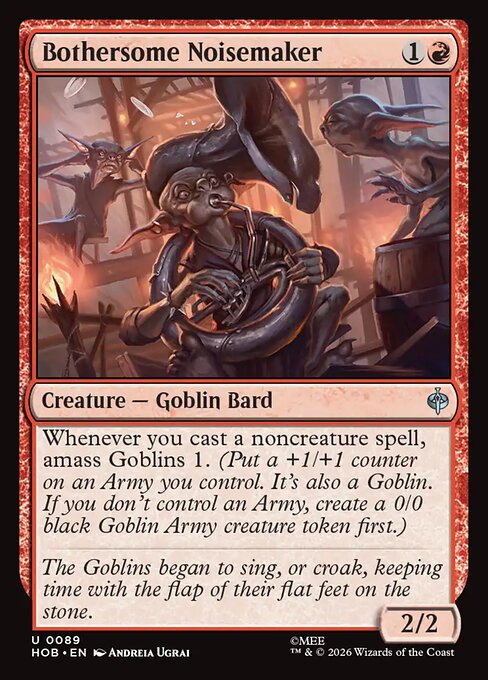
  • Bothersome Noisemaker

    Bothersome Noisemaker

    uncommon Creature — Goblin Bard

    Rewards the plan

    Why it works

    Every noncreature spell in the deck adds to your , from Pinecone Strike to Burn, Burn, Tree and Fern, and Plunder the Trollshaws and Tidings of War count once from your hand and again on . Played on turn 2 and followed by a noncreature spell each turn, it has a 3/3 Army beside it by turn 5.

    How to play it and the numbers

    How to play it

    The first trigger creates a 0/0 with one +1/+1 counter , and each later trigger adds a counter to that same Army. Lands and creature spells don't trigger it, so when you can afford only one card, a noncreature spell often comes first. Keep the 2/2 home as a blocker unless the attack is free.

    the rate on Bothersome Noisemaker is so good that even one or two triggers from it makes it a worthwhile play.

    Win rates

    Win rate when drawn () in Burn and Draw decks
    60.0% −1.0 vs all decks 1,364 games
    Win rate when drawn () in all decks
    61.0% 27,882 games

    Win rates from 17Lands.

    Replacements

    If you don't see Bothersome Noisemaker, these do the same job: rewards the plan.

    Win rates from .

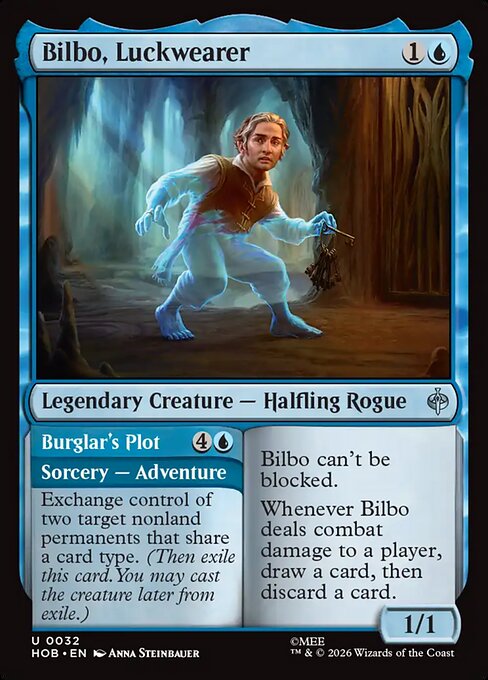
  • Bilbo, Luckwearer // Burglar's Plot

    Bilbo, Luckwearer // Burglar's Plot

    uncommon Legendary Creature — Halfling Rogue // Sorcery — Adventure

    Gets you extra cards

    Why it works

    Nothing can block this 2-mana 1/1, and each hit draws a card and discards one, usually a spare land or a card. Burglar's Plot (, ) exchanges control of two target nonland that share a card type, so late in the game your 1/1 becomes their best creature.

    How to play it and the numbers

    How to play it

    Once they land a , swap your worst creature for it with Burglar's Plot (a 1/1 Soldier or is ideal), and cast Bilbo from on a later turn. The two must share a card type, so a can take their or a Stone Boulder token but never a nonartifact creature. A second copy is worth more as Burglar's Plot.

    I've won longer games by tutoring up Bilbo, Luckwearer for that clutch switch after my opponent plays their .

    Win rates

    Win rate when drawn () in Burn and Draw decks
    59.8% −0.5 vs all decks 1,297 games
    Win rate when drawn () in all decks
    60.3% 29,559 games

    Win rates from 17Lands.

    Replacements

    If you don't see Bilbo, Luckwearer, these do the same job: gets you extra cards.

    Win rates from .

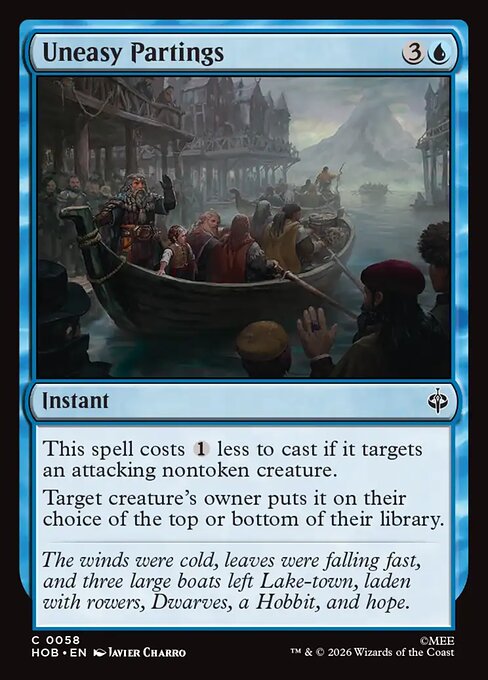
  • Uneasy Partings

    Uneasy Partings

    common Instant

    Removal

    Why it works

    Blue's answer to a big creature puts it into its owner's library, on top or bottom as they choose. Against an attacking nontoken creature it costs less, and since this deck blocks and waits, the 3-mana price comes up most games. They usually choose the top and draw it again, so it costs them a turn and their next draw.

    How to play it and the numbers

    How to play it

    Hold 3 mana on their turn and cast it after they declare attackers. The best targets carry an or counters, since those are gone for good. A put into a library stops existing, so on a big it is , but tokens never get the discount.

    it tends to play best when another color is providing cheap, reliable .

    Win rates

    Win rate when drawn () in Burn and Draw decks
    57.9% +1.7 vs all decks 1,734 games
    Win rate when drawn () in all decks
    56.2% 38,308 games

    Win rates from 17Lands.

    Replacements

    If you don't see Uneasy Partings, these do the same job: removal.

    Win rates from .
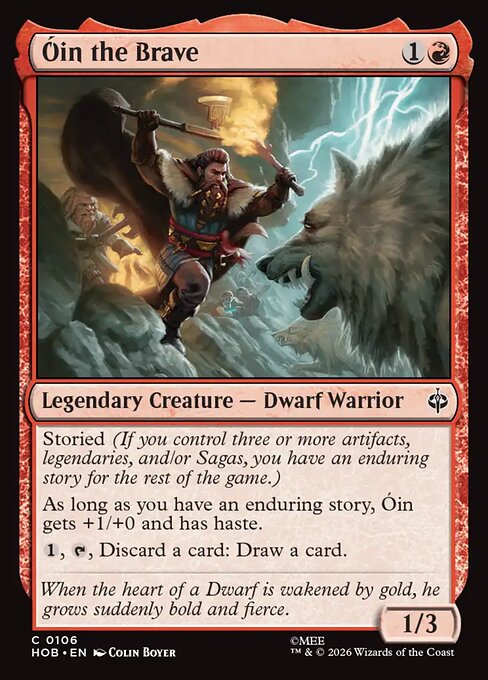
  • Óin the Brave

    Óin the Brave

    common Legendary Creature — Dwarf Warrior

    Sets up the plan

    Why it works

    His ability (, , discard a card: draw a card) turns spare lands into spells and is the deck's surest way to bin a card. He also gets +1/+0 and once you have an , which you keep for the rest of the game after you control three or more , and at once. Legendaries (Óin himself, Dori, both Bilbos, the Gandalfs, both Smaugs), , and Burn, Burn, Tree and Fern get this deck there. Drafters usually leave him until around pick 8, so rate him higher than they do.

    How to play it and the numbers

    How to play it

    Activate him at the end of the opponent's turn, after he has had the chance to block, and he untaps in your untap step.

    It can even be useful in discarding excess copies of itself and turn them into playable cards.

    Win rates

    Win rate when drawn () in Burn and Draw decks
    57.7% +2.0 vs all decks 1,356 games
    Win rate when drawn () in all decks
    55.7% 31,738 games

    Win rates from 17Lands.

    Replacements

    If you don't see Óin the Brave, these do the same job: sets up the plan.

    Win rates from .

How to tell it's open

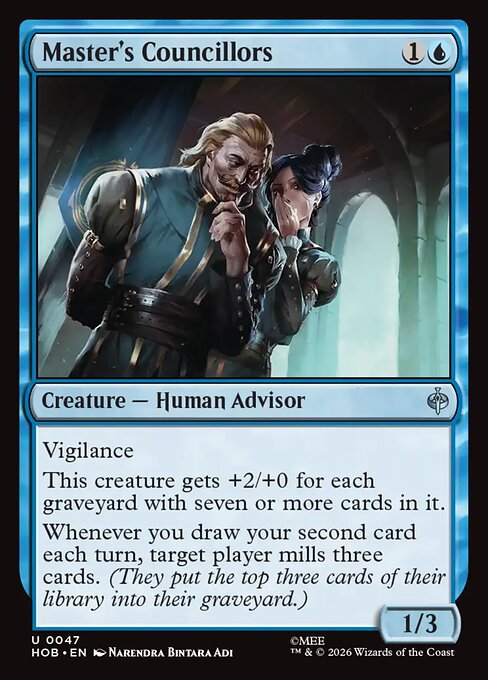
There is no blue and red to spot, so read each color on its own. Red is open when any of these is still in the pack at pick 6 or later: Pinecone Strike (usually taken around pick 4), Bothersome Noisemaker or Burn, Burn, Tree and Fern (both usually taken around pick 3). Blue is open when Bilbo, Luckwearer or Master's Councillors come mid-pack. Long Lake Nuisance, Uneasy Partings, Plunder the Trollshaws and Smaug, the Great Calamity go late in every draft (around pick 7–9), so seeing them late tells you little. The clearest signal for this deck is blue and red both still flowing while black and white dry up.

Common mistakes

  • Forcing Burn and Draw. With no and no dual land there is nothing to build toward. If black is open, Goblin Army (57.6% over 85,459 games) is the better deck.

  • Too few creatures. This deck's and card draw are spells, so a pile of good blue and red cards easily ends up short on bodies. Aim for 15–17 creatures. In pack 3, take Long Lake Nuisance, Patient Instructor or Dori, Bearer of Friends over a third or card-draw spell.

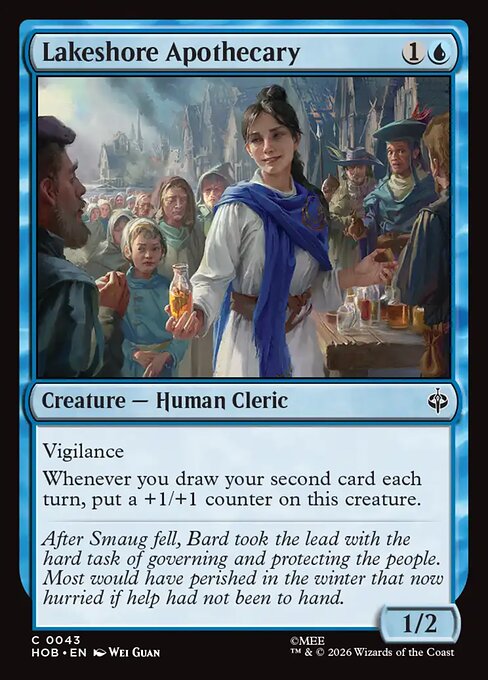
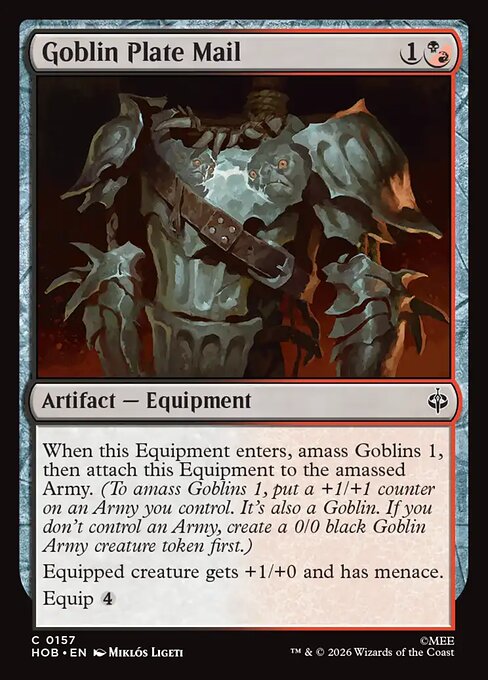
  • Drafting other decks' synergy cards. Lakeshore Apothecary (55.6% here, 58.7% in Draw Two) and Bilbo Baggins, Burglar are Draw Two cards, and Goblin Plate Mail (53.3% here, 58.1% in Goblin Army) is a Goblin Army card. They are fine here, but don't pick them over .

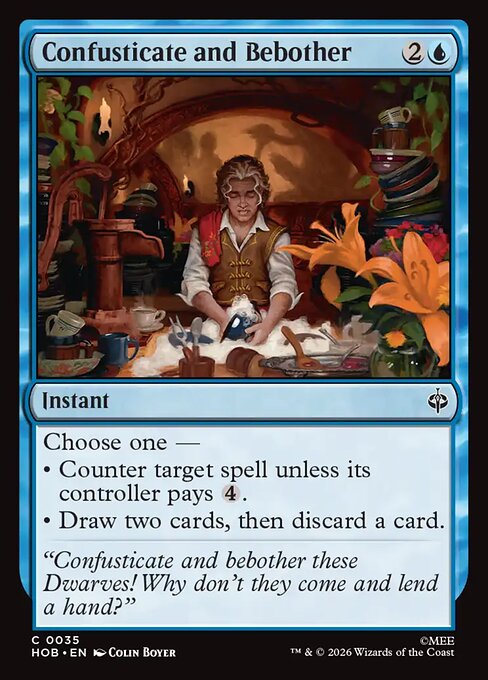
  • Holding up mana every turn. Thranduil's Decree does nothing if the opponent doesn't cast into it, and Confusticate and Bebother then only draws two and discards one. Meanwhile you fall behind. Play your creatures and on your own turn first.

  • Casting the creature half of an card from your hand. Smaug, the Great Calamity cast from hand throws Spew Flame away. Cast Spew Flame first and you get both halves.

  • Trusting a card's win rate in this deck too much. Misty Mountains Raider and Ragged Short Spear have a win rate here from only 810 games, the fewest that get one at all, so a 2-point gap there can be luck.

Better or worse in this deck