Cardsplain
On this page

This deck is rare but strong. Its decks win 56.8% over 4,805 games, right next to Goblin Army 57.6% over 85,459 games and Ferocious Wolves 56.9% over 57,277 games, two of the most-drafted decks. Most Removal Midrange decks belong to drafters who were passed both colors, which probably flatters that number. The card numbers are thin too. Even Crude Bent Blade, the most-played card here, has only 1,958 games in this deck, and most cards have no win rate here at all, so most numbers in these lessons are overall win rates. The deck is rare because nothing pulls you into it. The set has no white and black at any rarity, and no white and black dual land. Black's best commons have obvious homes in Goblin Army (Goblins and ) and Ferocious Wolves (), and white's best cards are fought over by Dwarves & Equipment and Draw Two drafters. End up here when both colors come to you late, for example when you started on black and white's best uncommons keep coming, or the other way round.

Deck win rate 56.8% +0.6 vs average 4,805 games

Compared with the set average (56.2%). Win rates from 17Lands.

How a game goes

From turn 4 on, cast Bilbo's Deadly Slice, Magnificent End or Celebrate the Mountain-king most turns until the opponent has nothing left to block your creatures.

  1. Early turns

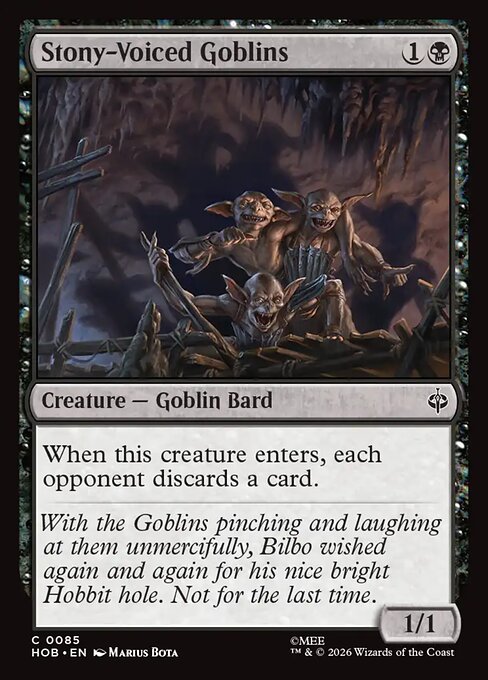
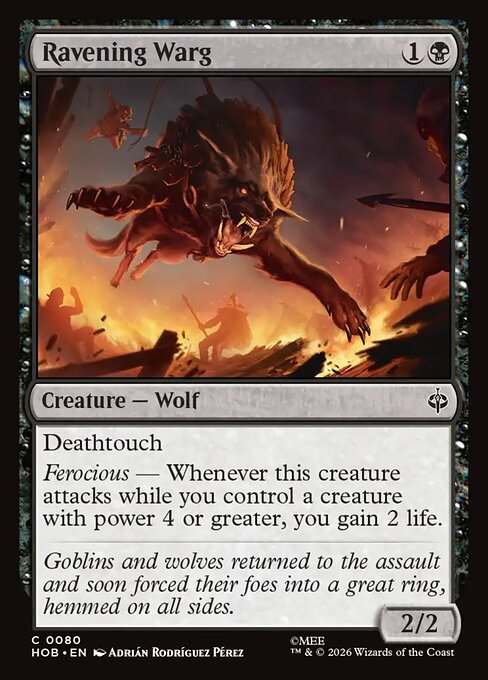
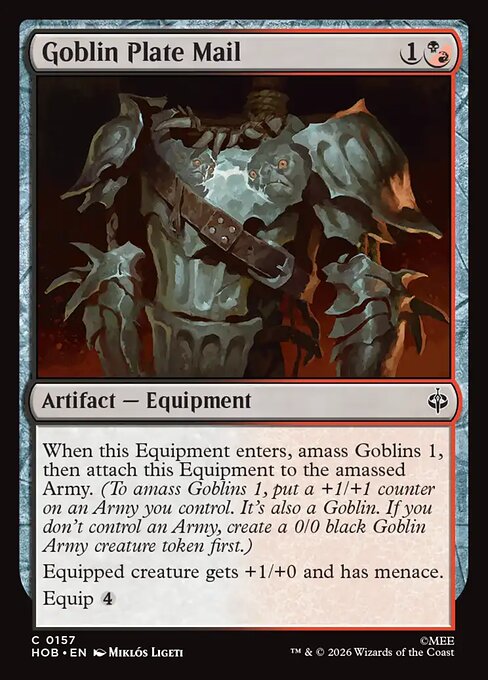
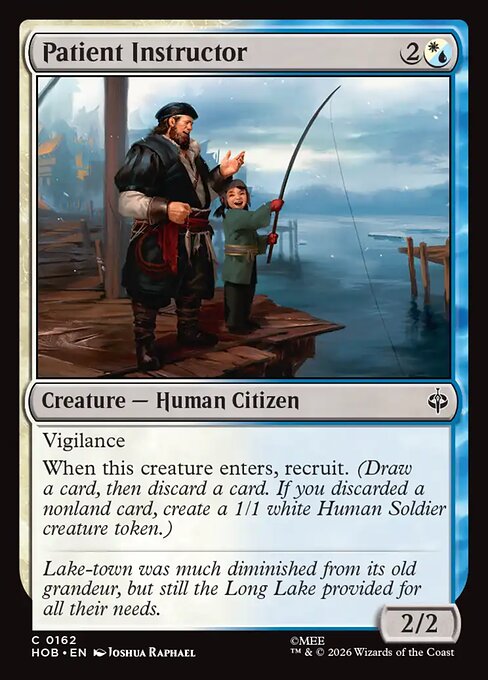
    Turns 1–3: play a (Desolation Prowler, Iron Hills Blacksmith, Goblin Plate Mail, Ravening Warg). On turn 3, cast Down, Down to Goblin-town to take their best card. Cast Crude Bent Blade instead if they have only one creature, or Patient Instructor if you need a body.

  2. Middle turns

    Turns 4–6: you pull ahead here by answering their best creature each turn (Celebrate the Mountain-king, Bilbo's Deadly Slice, Magnificent End during their attack) and adding a body like Gollum, Silent Slinker. Keep attacking with what survives, and once Crude Bent Blade has made its kill, equip it onto your best attacker.

  3. Late game

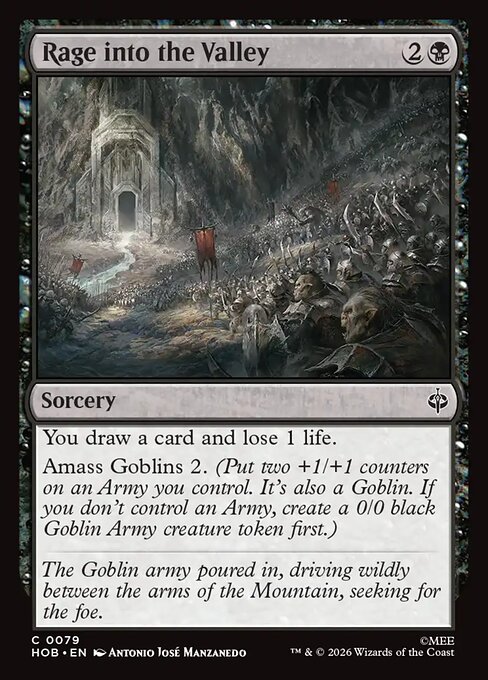
    Turn 7+: , Rage into the Valley and Gathering of Darkness keep cards coming while the opponent runs out. The deck has few big finishers to end the game with, so attack whenever they have no creatures, and save your last spell for the one creature that can still beat you.

Recruit

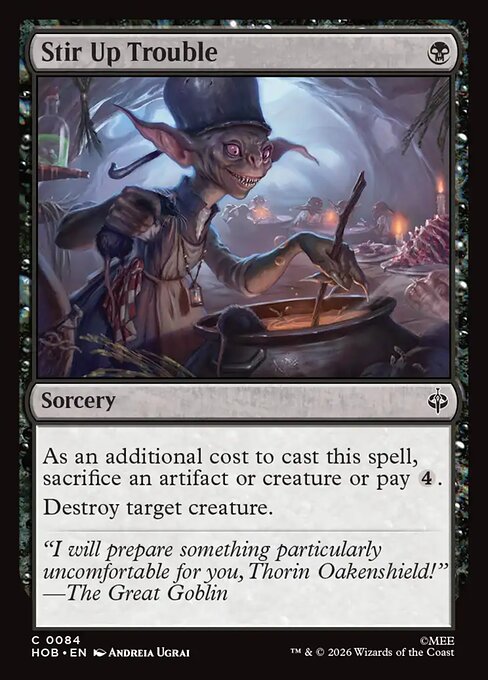
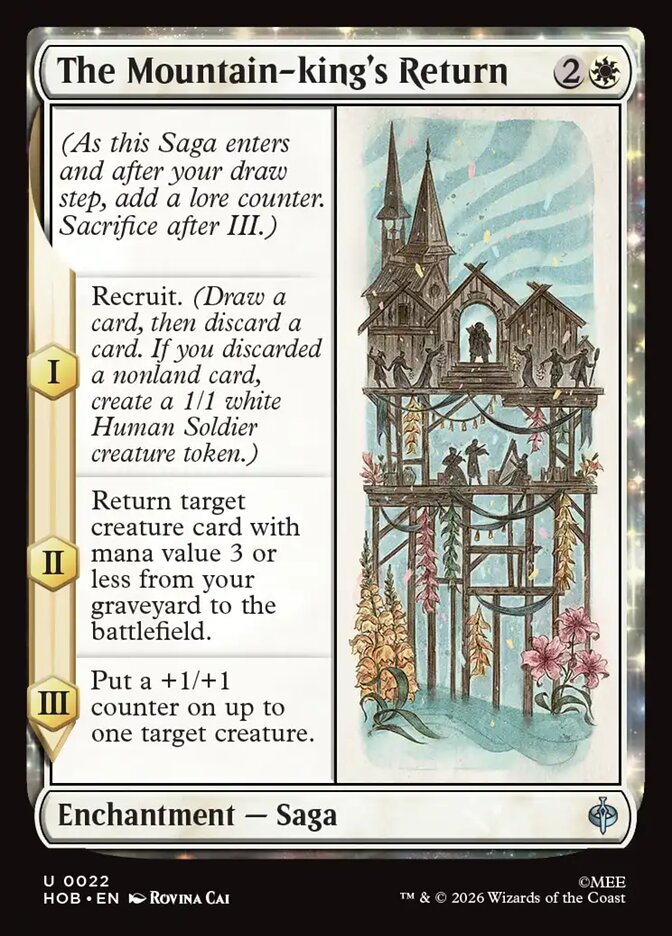
Removal Midrange wins with more than most decks can field and creatures that are good on their own. Of the set's mechanics, white's helps it most. You draw a card, then discard a card, and if the discarded card wasn't a land you also get a 1/1 white Human Soldier . Among white's recruit cards, Celebrate the Mountain-king, Patient Instructor and Esgaroth Garrison recruit when they enter, Lake-town Lookout recruits when it , and The Mountain-king's Return recruits in chapter I. Recruit smooths your draws (late in the game, discard an extra land). Its 1/1 tokens are bodies you can for Stir Up Trouble, or give up when the opponent's Crude Bent Blade forces a sacrifice. A creature card you discard can also come back. Chapter II of The Mountain-king's Return returns a creature card with 3 or less from your to the battlefield, and Gathering of Darkness returns a creature card to your hand.

Chapters of The Mountain-king's Return
Chapter I recruits, and chapter II returns a creature card with mana value 3 or less from your graveyard to the battlefield.

Example: with The Mountain-king's Return, chapter I lets you draw, discard Iron Hills Blacksmith and get a 1/1 token. On your next turn chapter II puts the Blacksmith onto the battlefield, and it makes a fresh Axe as it enters.

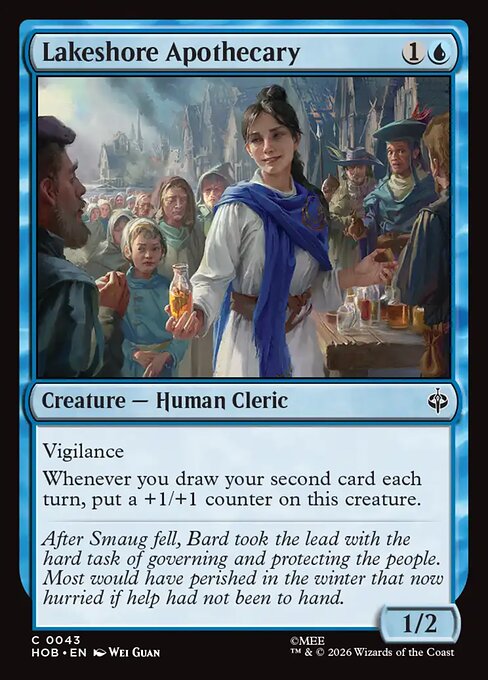
Step 1 of 4. You control Lakeshore Apothecary (1/2 vigilance): “Whenever you draw your second card each turn, put a +1/+1 counter on this creature.” Your turn starts and you draw normally. That's card #1 this turn. You have priority.

Your turn, first main phase.
Opponent 20 life
  • No permanents
You 20 life has
  • 1/2
Your hand

Key cards

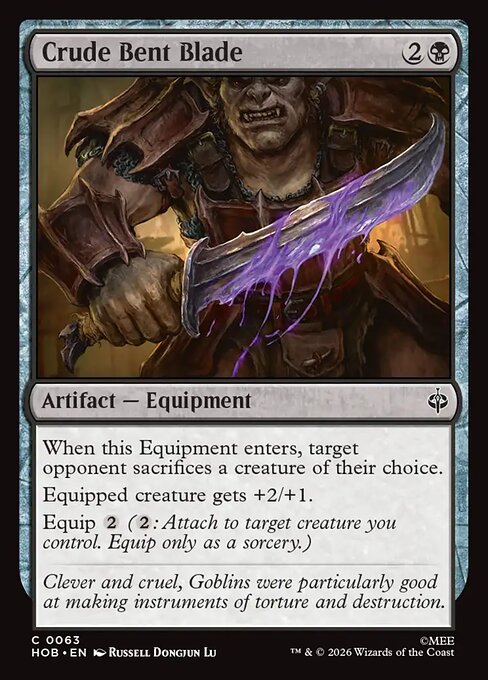
  • Crude Bent Blade

    Crude Bent Blade

    common Artifact — Equipment

    Removal

    Why it works

    Draftsim's pre-release review ranked edicts ( where the opponent picks what to ) among the worst kinds of removal. The Blade turned out to be one of the set's best commons, because the kill comes with a +2/+1 you keep all game. On Iron Hills Blacksmith it makes a 3/2 double striker, and on Gollum, Silent Slinker a 6/4 that still needs two blockers.

    How to play it and the numbers

    How to play it

    A 1/1 next to their 5/5 protects the 5/5, since they give up the token. Kill the big one with Bilbo's Deadly Slice and hold the Blade for a board where every creature is worth killing. When the creature carrying it , pay in your main phase to move it to the next one.

    Crude Bent Blade being an edict effect is one of the worst kinds of you can get

    Win rates

    Win rate when drawn () in Removal Midrange decks
    60.5% +0.1 vs all decks 1,958 games
    Win rate when drawn () in all decks
    60.4% 60,413 games

    Win rates from 17Lands.

    Replacements

    If you don't see Crude Bent Blade, these do the same job: removal.
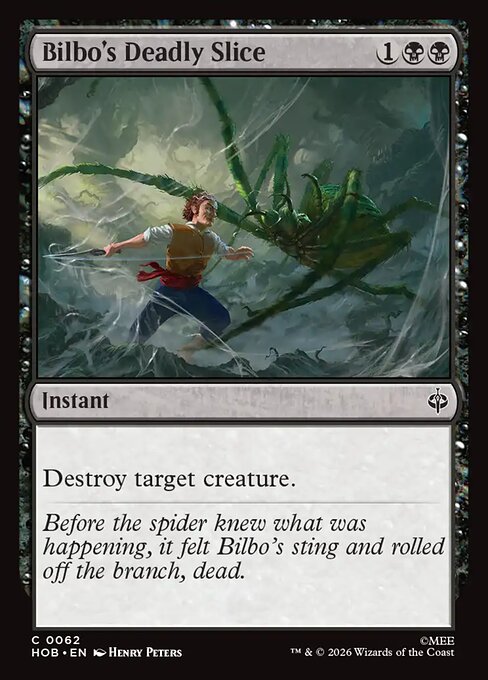
    Win rates from .
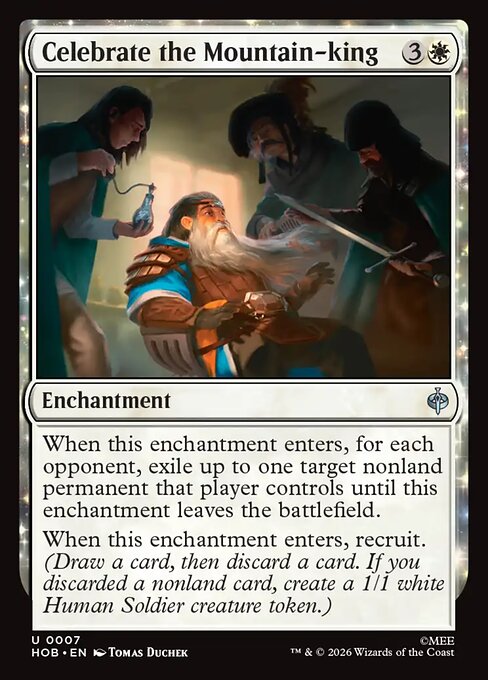
  • Celebrate the Mountain-king

    Celebrate the Mountain-king

    uncommon Enchantment

    Removal

    Why it works

    Black's hits only creatures. Celebrate exiles any nonland the opponent controls, so it answers an , a or a as well as their best creature. The lasts only while Celebrate stays on the battlefield.

    How to play it and the numbers

    How to play it

    With Bilbo's Deadly Slice in hand for their best creature, save Celebrate for the or the Slice can't touch. A white opponent can destroy it with Thorin's Last Stand and get their card back.

    one of which is the best in the entire set (Celebrate the Mountain-king)

    Win rates

    Win rate when drawn () in Removal Midrange decks
    61.9% −0.3 vs all decks 1,037 games
    Win rate when drawn () in all decks
    62.2% 30,687 games

    Win rates from 17Lands.

    Replacements

    If you don't see Celebrate the Mountain-king, these do the same job: removal.

    Win rates from .
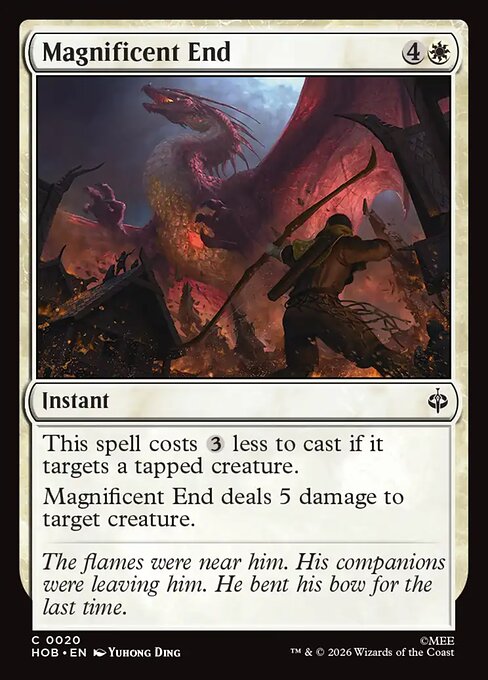
  • Bilbo's Deadly Slice

    Bilbo's Deadly Slice

    common Instant

    Removal

    Why it works

    Nothing limits the target, so the Slice kills what Stone by Sunlight and Crude Bent Blade miss, such as a 2-power creature with a dangerous ability or a big one with beside it.

    How to play it and the numbers

    How to play it

    Hold it for the creature nothing else in your deck handles. Cast it on their turn, after they attack or at the end of the turn, so you see their play first. A you can block doesn't deserve it.

    It cleanly answers any creature for just 3 mana, so any black deck will want to play it.

    Win rates

    Win rate when drawn () in Removal Midrange decks
    57.6% −0.1 vs all decks 1,239 games
    Win rate when drawn () in all decks
    57.7% 47,704 games

    Win rates from 17Lands.

    Replacements

    If you don't see Bilbo's Deadly Slice, these do the same job: removal.

    Win rates from .
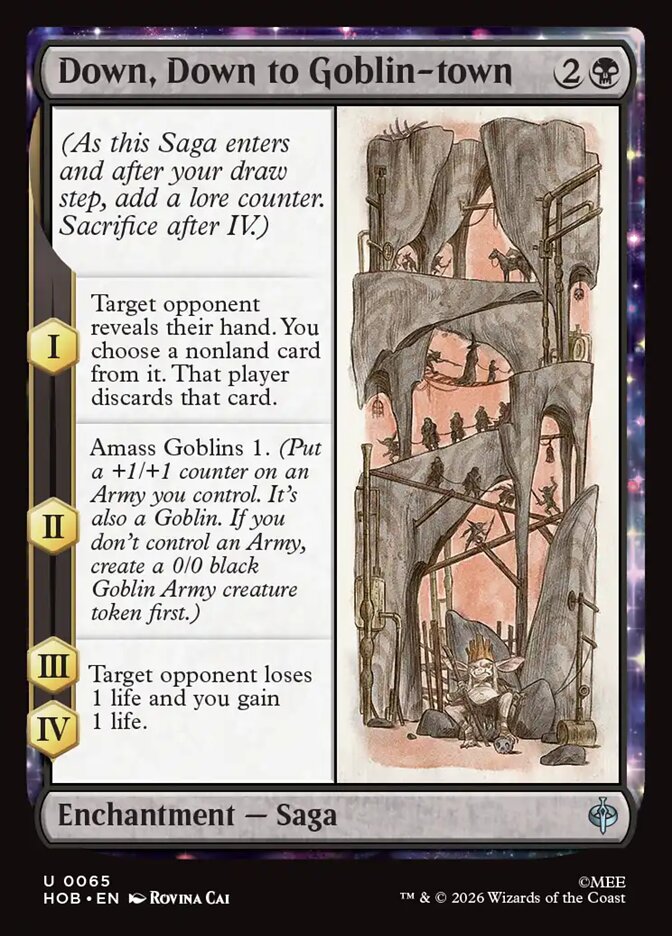
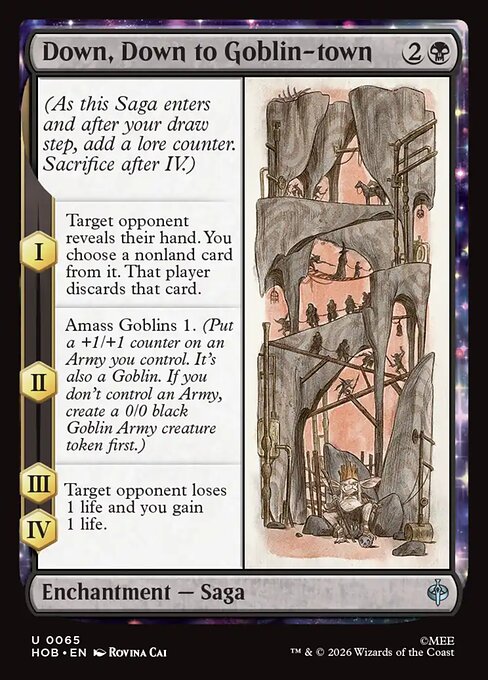
  • Down, Down to Goblin-town

    Down, Down to Goblin-town

    uncommon Enchantment — Saga

    Gets you extra cards

    Why it works

    Chapter I shows you their hand and makes them discard the nonland card you pick, which is for a card they haven't cast yet. Chapter II 1, and with no out that means a 0/0 Army that gets the +1/+1 counter . The last two chapters each drain 1 life.

    How to play it and the numbers

    How to play it

    Take the card that would hurt you most, usually the spell for your best creature or a , and plan your next turns around the rest of the hand you saw. Late in a long game their hand is often empty and chapter I does nothing, so cast a creature instead.

    A 1/1 Goblin Army plus two life drains over the next few turns is definitely enough upside to warrant playing this.

    Win rates

    Win rate when drawn () in Removal Midrange decks
    62.0% +2.7 vs all decks 959 games
    Win rate when drawn () in all decks
    59.3% 27,443 games

    Win rates from 17Lands.

    Replacements

    If you don't see Down, Down to Goblin-town, these do the same job: gets you extra cards.

    Win rates from .

  • Desolation Prowler

    Desolation Prowler

    uncommon Creature — Wolf

    Threat

    Why it works

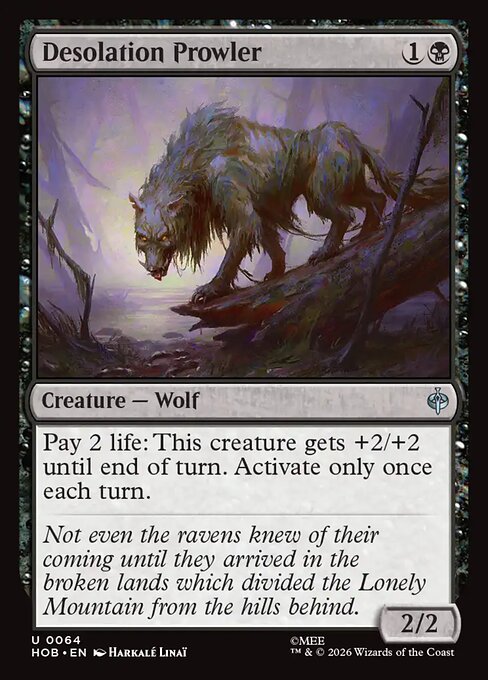
    Paying 2 life makes this a 4/4 until end of turn, once each turn and with no mana spent. Early it holds off 3-drops on defense, and late it still hits for 4.

    How to play it and the numbers

    How to play it

    Attack as a 2/2 and decide after blockers are declared. Pay the life if a 3/3 blocks, and when nothing blocks, pay only if 2 more damage is worth 2 life to you.

    It's best in aggressive decks, but secretly an incredible blocker too.

    Win rates

    Win rate when drawn () in Removal Midrange decks
    58.8% −2.4 vs all decks 924 games
    Win rate when drawn () in all decks
    61.2% 30,018 games

    Win rates from 17Lands.

    Replacements

    If you don't see Desolation Prowler, these do the same job: threat.

    Win rates from .

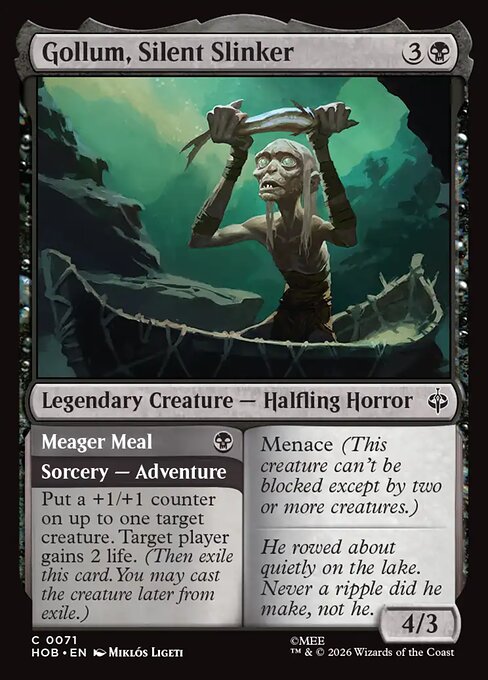
  • Gollum, Silent Slinker // Meager Meal

    Gollum, Silent Slinker // Meager Meal

    common Legendary Creature — Halfling Horror // Sorcery — Adventure

    Threat

    Why it works

    Draftsim's review found neither half good. Together they give you a 1-mana play early and a 4/3 with later from one common, and the opponent needs two blockers to stop it. Meager Meal, the half, costs and puts a +1/+1 counter on up to one target creature while a target player gains 2 life. The card then waits in , and you can cast Gollum from there.

    How to play it and the numbers

    How to play it

    Gollum is , and if you control two with the same name you keep one and put the other in the . So with one Gollum out, cast the second copy only as Meager Meal and leave the creature in until the first . A spare on turn 3 pays for Meager Meal on your , and Gollum follows from exile later.

    Neither Gollum, Silent Slinker nor Meager Meal are particularly good.

    Win rates

    Win rate when drawn () in Removal Midrange decks
    59.2% +0.0 vs all decks 1,849 games
    Win rate when drawn () in all decks
    59.2% 52,853 games

    Win rates from 17Lands.

    Replacements

    If you don't see Gollum, Silent Slinker, these do the same job: threat.

    Win rates from .

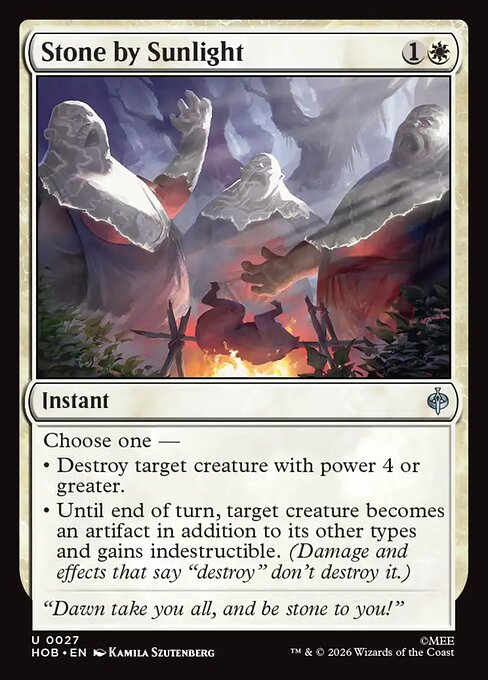
  • Stone by Sunlight

    Stone by Sunlight

    uncommon Instant

    Removal

    Why it works

    At speed and , the first mode destroys a creature with at least 4 power, which covers most threats your 2- and can't block. The second mode makes one of your creatures an with until end of turn, so a destroy effect or lethal damage won't kill it.

    How to play it and the numbers

    How to play it

    Kill their big creature when it attacks or at the end of their turn, so the mana stays open as long as possible. A 3/3 is out of its and goes to Crude Bent Blade or Bilbo's Deadly Slice instead. With no big target on their side, keep it to save your best creature from their Bilbo's Deadly Slice.

    It's a situational spell that's pretty much never dead in your hand, because you can also protect one of your creatures.

    Win rates

    Win rate when drawn () in Removal Midrange decks
    58.4% −1.9 vs all decks 915 games
    Win rate when drawn () in all decks
    60.3% 28,322 games

    Win rates from 17Lands.

    Replacements

    If you don't see Stone by Sunlight, these do the same job: removal.

    Win rates from .
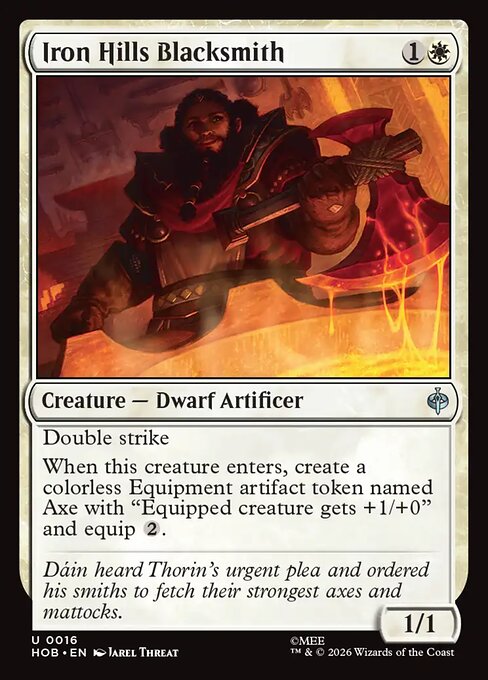
  • Iron Hills Blacksmith

    Iron Hills Blacksmith

    uncommon Creature — Dwarf Artificer

    Early play

    Why it works

    Double strike makes every count twice, and this 1/1 for 2 brings its own, an Axe that gives +1/+0 (equip ). With the Axe it hits for 2 twice, so it kills a blocker with 2 toughness or less before that blocker deals damage back.

    How to play it and the numbers

    How to play it

    Pay to equip the Axe before it attacks on turn 3 or 4. With 1 toughness it to almost anything, so stack nothing more on it while the opponent has mana open for . The Axe stays when the Blacksmith dies, ready for your next creature.

    Double Strike gets out of hand very quickly.

    Win rates

    Win rate when drawn () in Removal Midrange decks
    59.4% +1.4 vs all decks 922 games
    Win rate when drawn () in all decks
    58.0% 22,521 games

    Win rates from 17Lands.

    Replacements

    If you don't see Iron Hills Blacksmith, these do the same job: early play.

    Win rates from .

How to tell it's open

Read the two colors separately. Black is open when Crude Bent Blade or Bilbo's Deadly Slice (usually gone around pick 3 or 4) is still in the pack at pick 6 or later. White is open when Celebrate the Mountain-king (usually taken around pick 3) or Stone by Sunlight shows up at pick 5 or later, or when Magnificent End (usually taken around pick 6) is still in a pack when it comes back around to you. Black is the most drafted color, so the usual risk is black drying up. If both colors still come late in pack 1, this deck is likely open because almost nobody aims for it.

Common mistakes

  • Forcing this deck from pick 1. Take the strongest black or white card and settle in only once both colors keep coming.

  • Taking every spell and ending with 10 or 11 creatures. A removal spell can't block or attack, so aim for 15–17 creatures. Late in pack 2 and pack 3, take a solid 2- or over your seventh or eighth removal spell.

  • Taking Azog, Moria's Ruin or Orcrist, Goblin-cleaver over Bilbo's Deadly Slice or Crude Bent Blade because they are a rare and a mythic. Take the common .

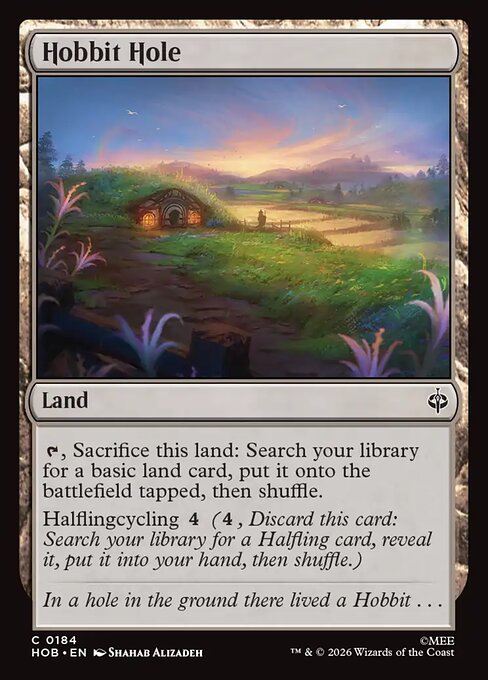
  • Ignoring the mana. Count your colored mana symbols and split 17 lands to match. Bilbo's Deadly Slice needs , so a slight lean to Swamps is common. Pick up Hobbit Hole to smooth it out.

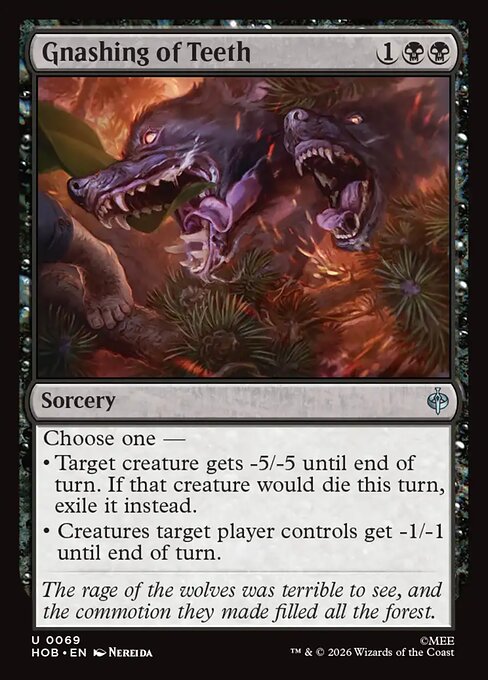
  • Using Stone by Sunlight's protect mode against the wrong thing. stops "destroy" effects and lethal damage, but not a (an opposing Crude Bent Blade) or a -5/-5 like Gnashing of Teeth.

Better or worse in this deck