Cardsplain
On this page

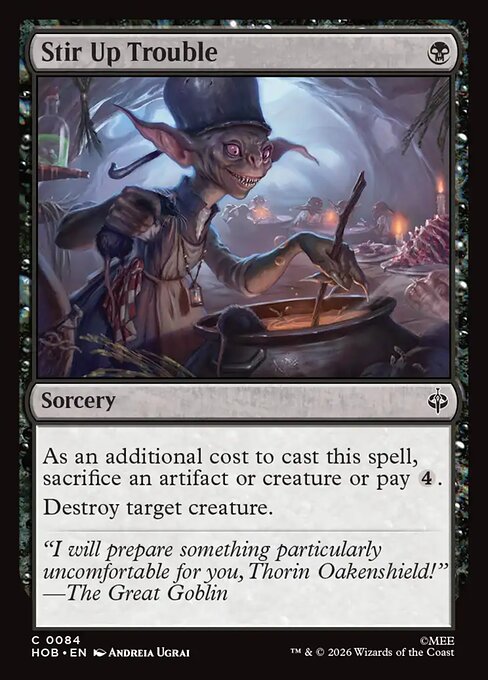
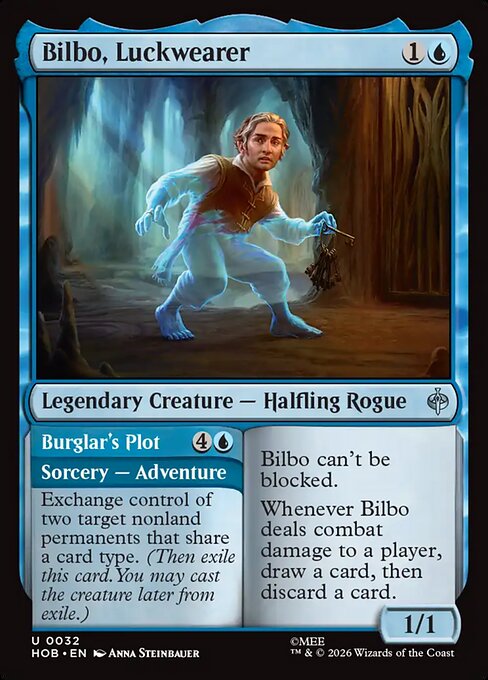
Removal Control is below average at 53.2% over 12,745 games, clearly behind the top five decks (Goblin Army 57.6% over 85,459 games, Ferocious Wolves 56.9% over 57,277 games, Removal Midrange 56.8% over 4,805 games, Dwarves & Equipment 56.5% over 52,797 games and Draw Two 56.4% over 58,594 games), with enough games that it isn't bad luck. It has no and no shared mechanic, so it borrows cards built for other decks, and most of them lose value here. Black's cheap creatures are made for and (Desolation Prowler wins 57.2% here, 61.9% in Ferocious Wolves), and blue's are made for and extra draws in Draw Two (Bilbo, Luckwearer wins 56.6% here, 62.5% in Draw Two). Some keeps its value. Gnashing of Teeth (56.7%) and Stir Up Trouble (56.4%) do about as well here as overall.

So draft it as a black removal deck with blue's drawing and discarding on top. Take removal first, then creatures that block well, then card draw and . It's the right deck when black is wide open but red, green and white are cut, and blue is the color that keeps coming.

Deck win rate 53.2% −3.0 vs average 12,745 games

Compared with the set average (56.2%). Win rates from 17Lands.

How a game goes

Trade creatures early and answer the rest with Gnashing of Teeth, then win in the air with Long Lake Nuisance once the opponent has no creatures left.

  1. Early turns

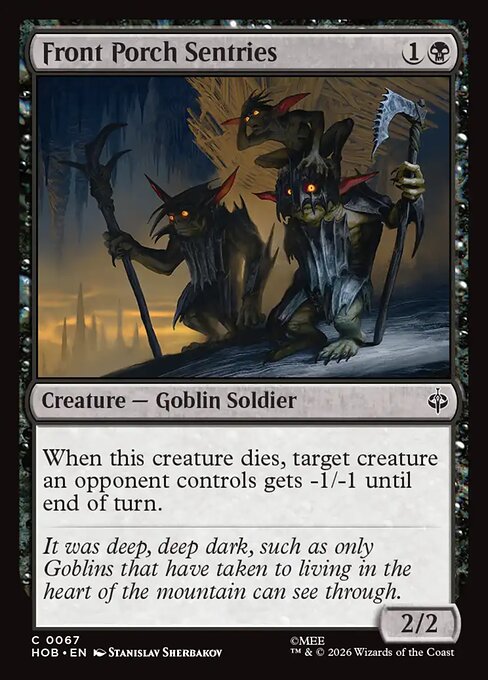
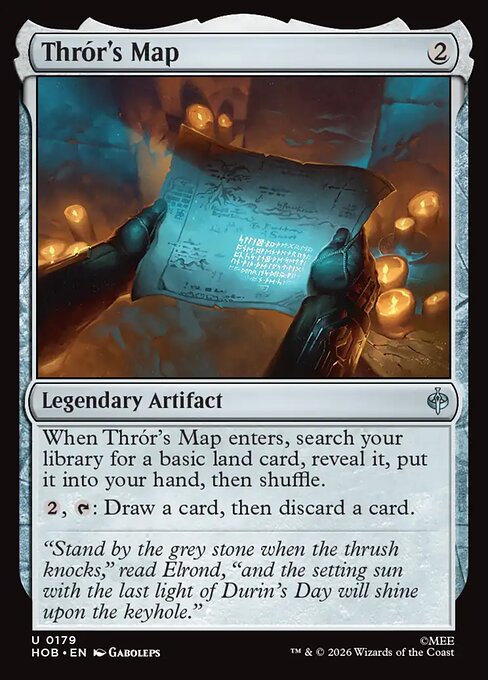
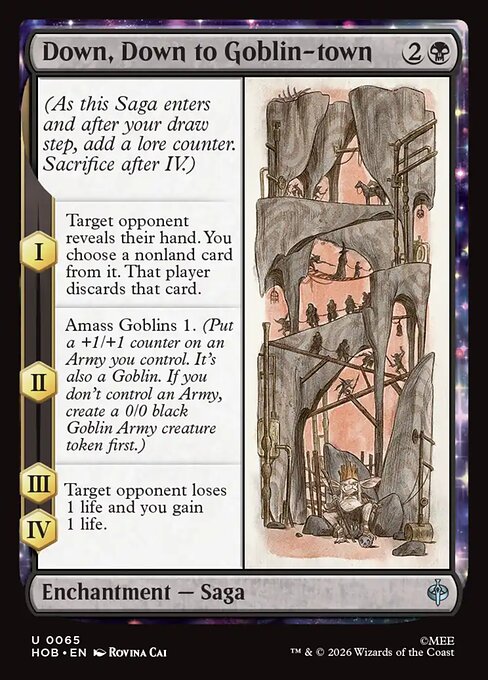
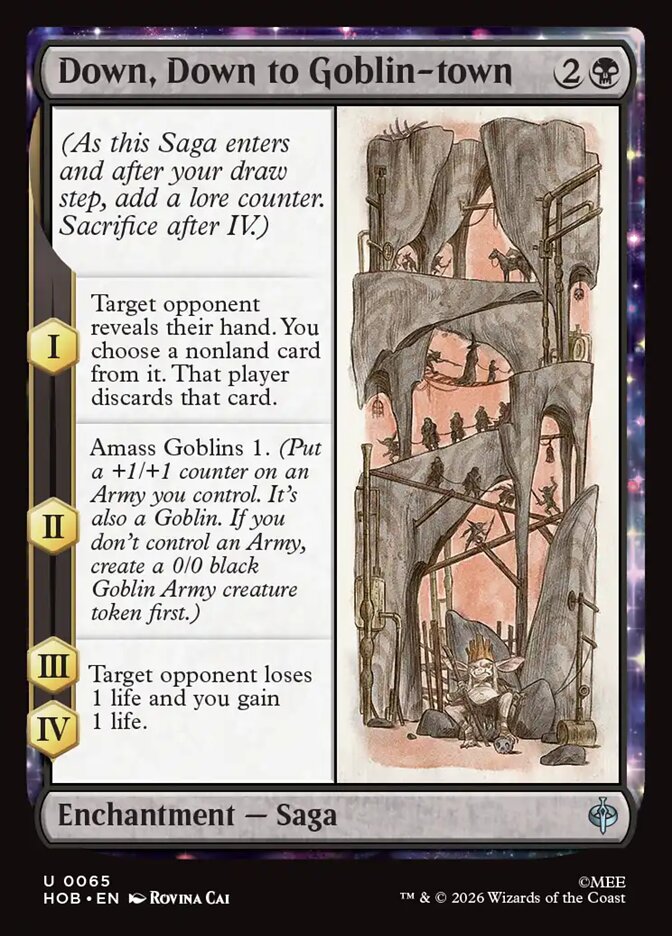
    Turns 1–3: don't race. Play a blocker on turn 2 (Desolation Prowler, Ravening Warg, Front Porch Sentries) or Thrór's Map if you have none, then Down, Down to Goblin-town or Crude Bent Blade on turn 3. Trade creatures freely, because later you'll have more and more cards than they do.

  2. Middle turns

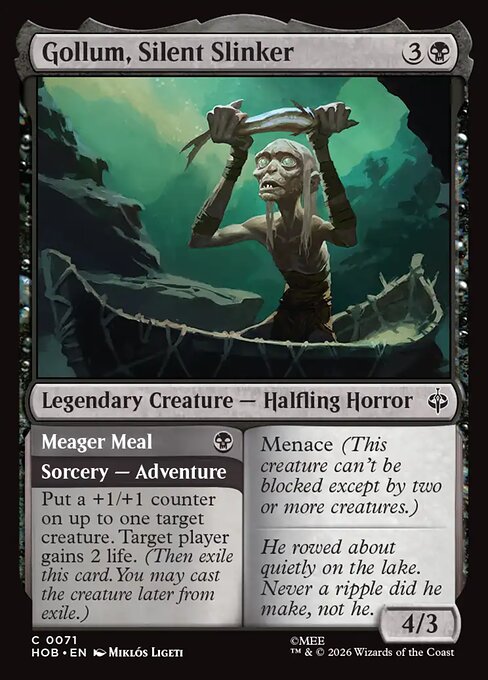
    Turns 4–6: kill their best creature and keep a blocker home. Your pressure starts with Long Lake Nuisance and Gollum, Silent Slinker.

  3. Late game

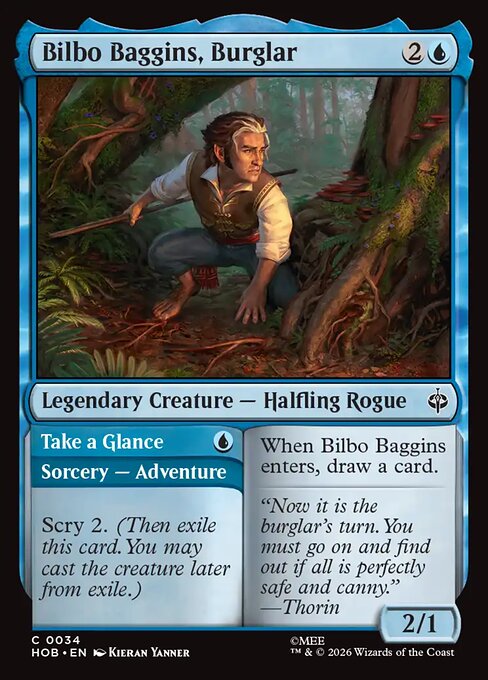
    Turn 7+: back Plunder the Trollshaws, with Thrór's Map, swap a for their with Burglar's Plot, and win with and while your keeps the ground clear.

Recruit and extra draws

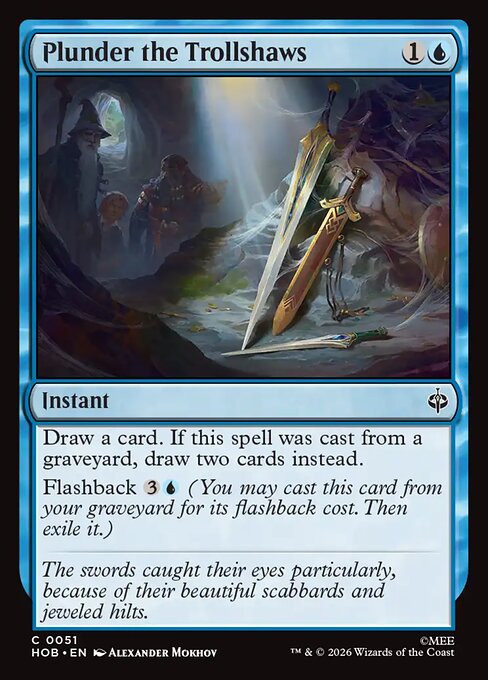
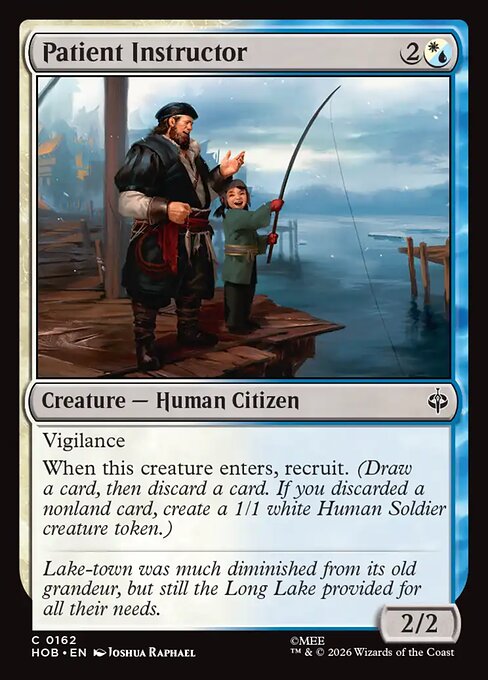
The deck keeps drawing extra cards and throwing away the ones you don't need, to find the next spell. Blue's main tool is . You draw a card, then discard a card, and if the discarded card isn't a land, you also create a 1/1 white Human Soldier . Recruit comes on Long Lake Nuisance and Patient Instructor when they enter, and on Great Gilded Boat every time you attack. The best card to discard is Plunder the Trollshaws. You get the token, and its () lets you cast it from your later to draw two cards.

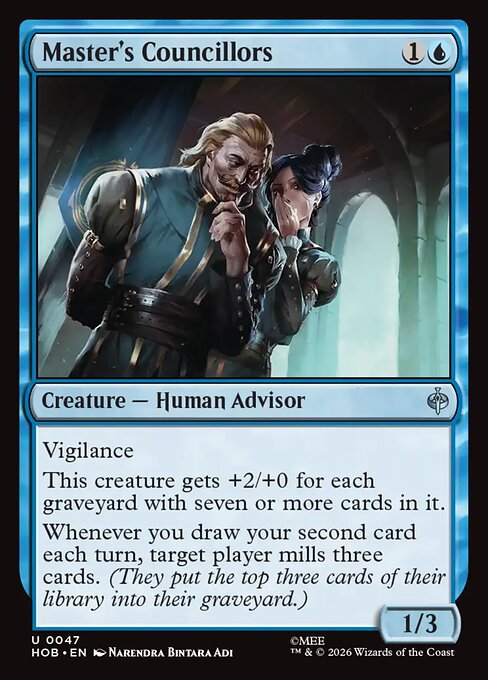
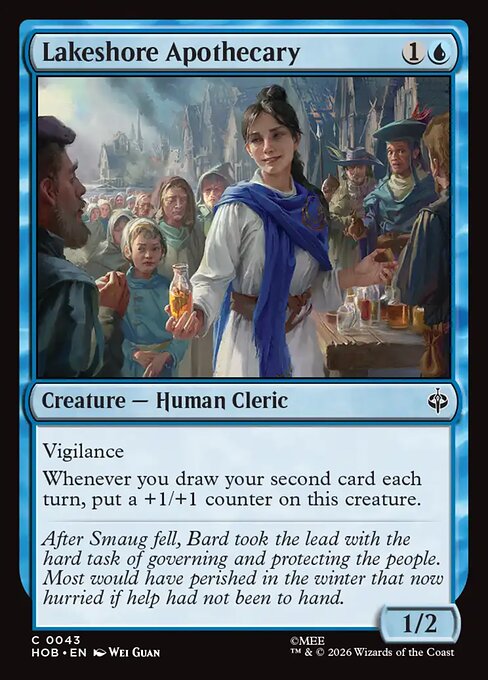
Some blue cards count your draws. On Lakeshore Apothecary and Master's Councillors, "whenever you draw your second card each turn" triggers once per turn. On your own turn the draw step gives you the first card, so any extra draw that turn (a recruit, Bilbo Baggins, Burglar entering, a Thrór's Map ) turns it on. On the opponent's turn you need two draws. Flashing back Plunder (draw two) does it, and casting it from your hand (draw one) doesn't. This deck has fewer of these extra draws than Draw Two, so those payoff cards are weaker here.

Step 1 of 4. You control Lakeshore Apothecary (1/2 vigilance): “Whenever you draw your second card each turn, put a +1/+1 counter on this creature.” Your turn starts and you draw normally. That's card #1 this turn. You have priority.

Your turn, first main phase.
Opponent 20 life
  • No permanents
You 20 life has
  • 1/2
Your hand

Key cards

  • Crude Bent Blade

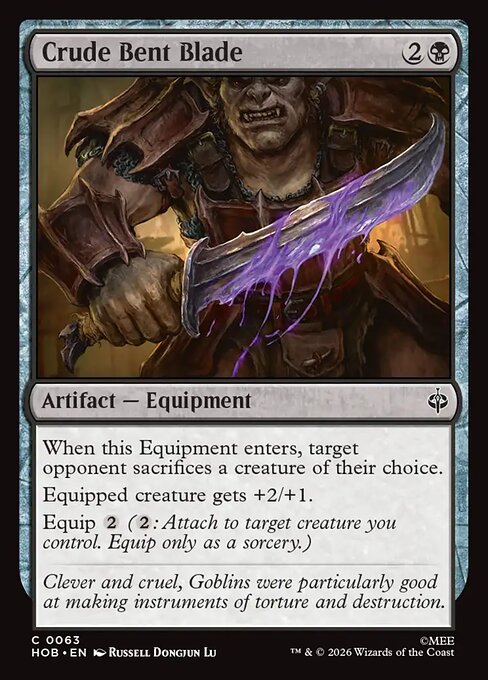
    Crude Bent Blade

    common Artifact — Equipment

    Removal

    Why it works

    Before release a reviewer called a forced like this one (an "edict") one of the worst kinds of . A deck that trades its early creatures and kills the next ones leaves the opponent with one or two creatures, and then the edict takes one that matters.

    How to play it and the numbers

    How to play it

    Wait until they have one creature, or until your trades have cleared away the small ones. Against a 1/1 next to a big creature, the Blade only takes the token, so use targeted on the big one.

    Crude Bent Blade being an edict effect is one of the worst kinds of you can get

    Win rates

    Win rate when drawn () in Removal Control decks
    57.3% −3.1 vs all decks 5,364 games
    Win rate when drawn () in all decks
    60.4% 60,413 games

    Win rates from 17Lands.

    Replacements

    If you don't see Crude Bent Blade, these do the same job: removal.
    Win rates from .
  • Bilbo's Deadly Slice

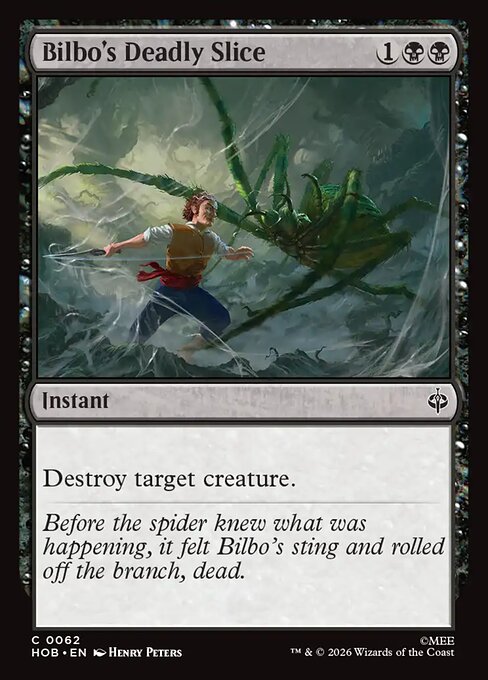
    Bilbo's Deadly Slice

    common Instant

    Removal

    Why it works

    Any creature to it, at speed and with no condition, so this is the card you keep for their . The cost wants two black sources by turn 3, one more reason to make black the main color.

    How to play it and the numbers

    How to play it

    Hold it through your own turn and cast it after attackers are declared or at their end step. If nothing worth killing shows up, the mana goes to Plunder the Trollshaws or a Thrór's Map instead. A that isn't hurting you can wait for Crude Bent Blade.

    It cleanly answers any creature for just 3 mana, so any black deck will want to play it.

    Win rates

    Win rate when drawn () in Removal Control decks
    55.7% −2.0 vs all decks 4,048 games
    Win rate when drawn () in all decks
    57.7% 47,704 games

    Win rates from 17Lands.

    Replacements

    If you don't see Bilbo's Deadly Slice, these do the same job: removal.

    Win rates from .
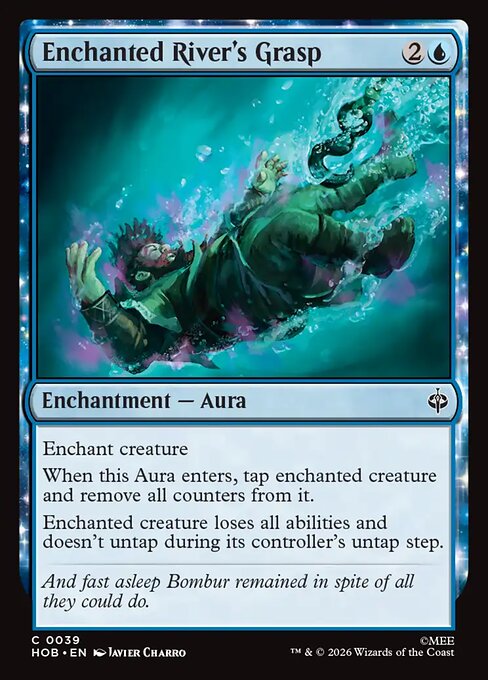
  • Gnashing of Teeth

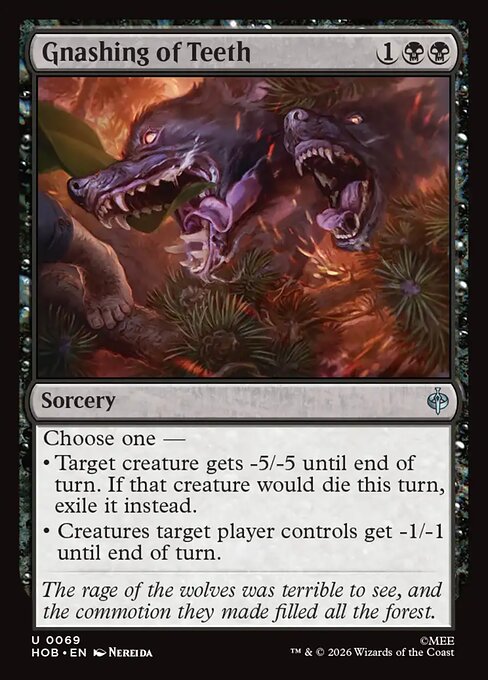
    Gnashing of Teeth

    uncommon Sorcery

    Removal

    Why it works

    Its two modes cover different boards. The -5/-5 mode kills almost any single creature, and the -1/-1 mode aimed at the opponent wipes out every X/1 they control, such as Soldiers, a 1/1 and Long Lake Nuisance. By the time a slow deck reaches turn 6, most opponents have spread out small , so the second mode gets used a lot.

    How to play it and the numbers

    How to play it

    As a it waits for your main phase, so cast it before combat to clear the blockers. With two or more X/1s across from you, the -1/-1 mode beats spending it on one creature. Keep the -5/-5 mode for a creature that would come back, such as Gollum the Abandoned, or one with a trigger, such as Rhovanion Rampager.

    Gnashing of Teeth is exceptionally flexible for three mana

    Win rates

    Win rate when drawn () in Removal Control decks
    56.7% +0.4 vs all decks 1,521 games
    Win rate when drawn () in all decks
    56.3% 19,973 games

    Win rates from 17Lands.

    Replacements

    If you don't see Gnashing of Teeth, these do the same job: removal.

    Win rates from .
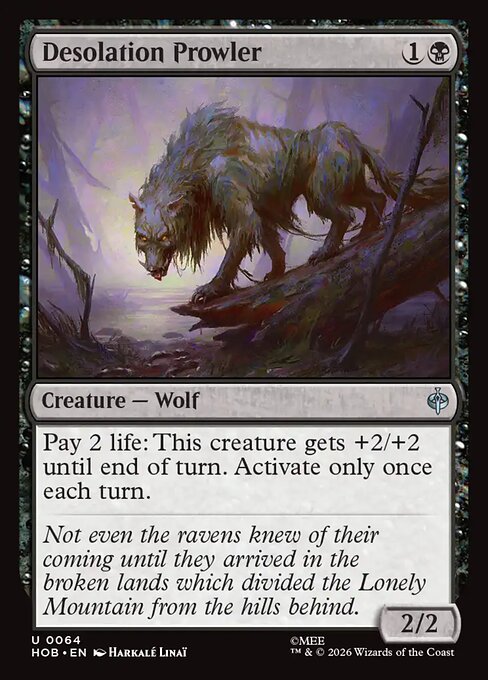
  • Stir Up Trouble

    Stir Up Trouble

    common Sorcery

    Removal

    Why it works

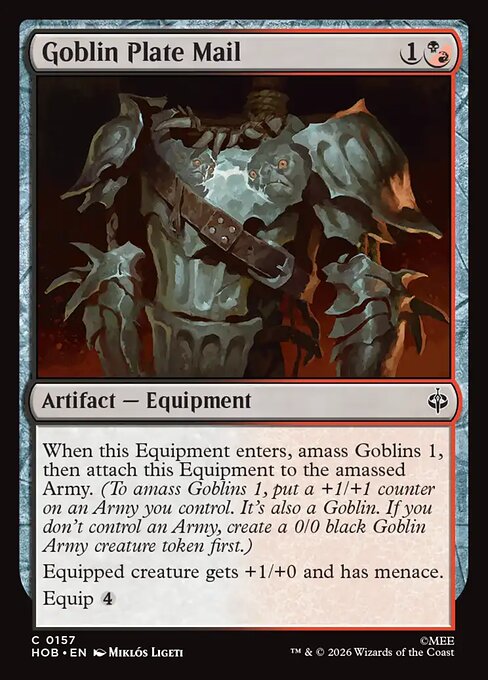
    A reviewer expected only Goblin Army to have the spare bodies its extra cost asks for. Removal Control has plenty of them: Soldiers, the from Down, Down to Goblin-town or Goblin Plate Mail, and a Thrór's Map that has done its job. With one of those, the spell kills any creature for .

    How to play it and the numbers

    How to play it

    Front Porch Sentries is the best , because its trigger then shrinks another of their creatures, a against X/1s. With no spare body, pay instead and treat it as a 5-mana kill spell late in the game. Don't feed it a blocker you still need.

    Stir Up Trouble won't be able to go into every black deck, but it'll excel in the decks that really want it, namely the black/red goblins decks.

    Win rates

    Win rate when drawn () in Removal Control decks
    56.4% −0.6 vs all decks 3,916 games
    Win rate when drawn () in all decks
    57.0% 48,095 games

    Win rates from 17Lands.

    Replacements

    If you don't see Stir Up Trouble, these do the same job: removal.

    Win rates from .
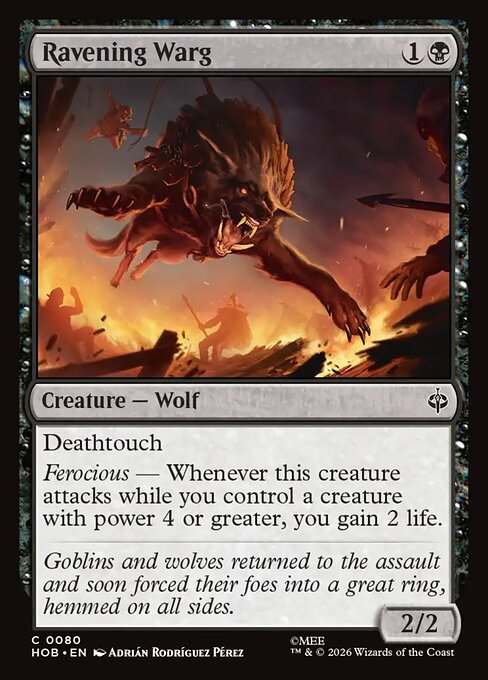
  • Desolation Prowler

    Desolation Prowler

    uncommon Creature — Wolf

    Early play

    Why it works

    It's the best creature below rare here, because few early attackers get past it. Once each turn, for 2 life and no mana, the 2/2 gets +2/+2 until end of turn, so it blocks like a 4/4.

    How to play it and the numbers

    How to play it

    Pay the life after blockers are declared, when the attacker can no longer back out. The limit resets each turn, so it can grow on their turn and again on yours. While the opponent is racing you, don't spend 2 life a turn to attack for 4.

    It's best in aggressive decks, but secretly an incredible blocker too.

    Win rates

    Win rate when drawn () in Removal Control decks
    57.2% −4.0 vs all decks 2,614 games
    Win rate when drawn () in all decks
    61.2% 30,018 games

    Win rates from 17Lands.

    Replacements

    If you don't see Desolation Prowler, these do the same job: early play.

    Win rates from .
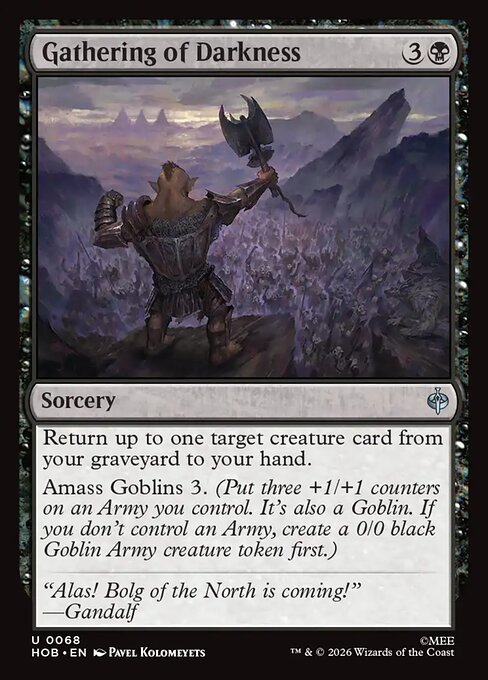
  • Bilbo, Luckwearer // Burglar's Plot

    Bilbo, Luckwearer // Burglar's Plot

    uncommon Legendary Creature — Halfling Rogue // Sorcery — Adventure

    Gets you extra cards

    Why it works

    The 1/1 can't be blocked, so its happens on every turn it attacks. Burglar's Plot (, ) exchanges control of two nonland that share a card type, such as your Soldier and their best creature. Once the Plot , the card goes to , and you can cast the creature later from there.

    How to play it and the numbers

    How to play it

    With nothing else to do on turn 2, cast Bilbo and start . From 5 mana on, the card is often worth more held for Burglar's Plot. Give away a Soldier or your weakest creature for their , then cast Bilbo from on a later turn.

    I've won longer games by tutoring up Bilbo, Luckwearer for that clutch switch after my opponent plays their .

    Win rates

    Win rate when drawn () in Removal Control decks
    56.6% −3.7 vs all decks 3,578 games
    Win rate when drawn () in all decks
    60.3% 29,559 games

    Win rates from 17Lands.

    Replacements

    If you don't see Bilbo, Luckwearer, these do the same job: gets you extra cards.

    Win rates from .
  • Plunder the Trollshaws

    Plunder the Trollshaws

    common Instant

    Gets you extra cards

    Why it works

    One card gives you three draws at speed, one from your hand and two more from . That fits a deck that keeps mana up for on the opponent's turn and often doesn't use it.

    How to play it and the numbers

    How to play it

    Save the for a turn with to spare after your . If the opponent plays Gollum the Abandoned, it back sooner, because Gollum's enters ability can it from your .

    The money shot to discard is Plunder the Trollshaws

    Win rates

    Win rate when drawn () in Removal Control decks
    55.8% −2.7 vs all decks 5,997 games
    Win rate when drawn () in all decks
    58.5% 50,977 games

    Win rates from 17Lands.

    Replacements

    If you don't see Plunder the Trollshaws, these do the same job: gets you extra cards.

    Win rates from .
  • Long Lake Nuisance

    Long Lake Nuisance

    common Creature — Bird

    Threat

    Why it works

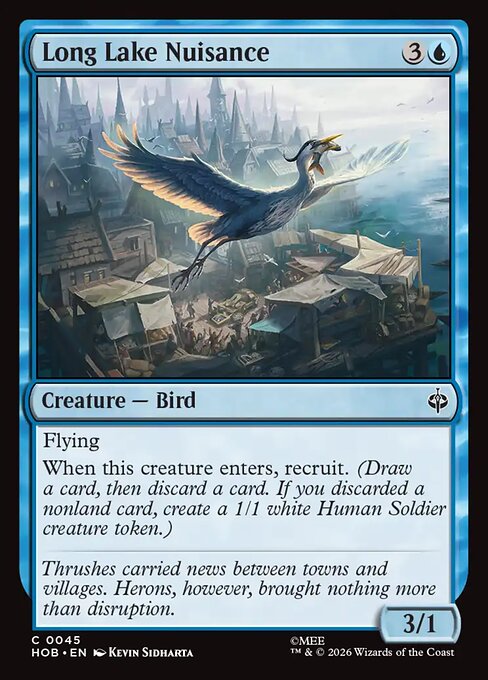
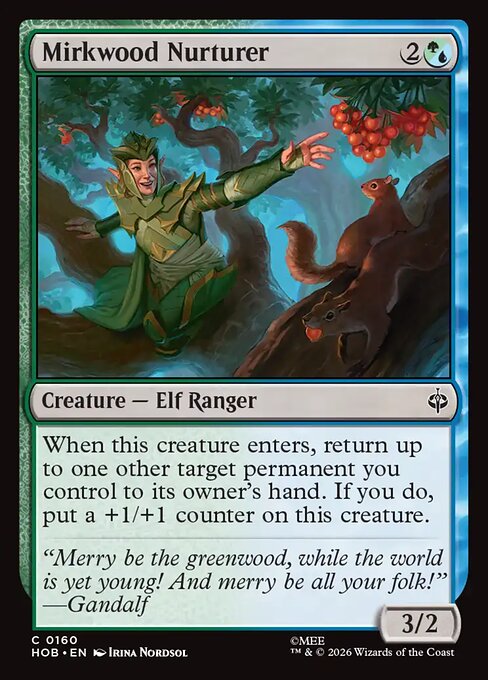
    Removal Control decks play this more than any other nonland card, because a 3-power is how a deck that stalls the ground wins. The as it enters digs one card deeper, and often leaves a Soldier, before the bird attacks.

    How to play it and the numbers

    How to play it

    Attack in the air every turn and leave blocking to the ground creatures. When the opponent has no , Crude Bent Blade on it makes a 5/2 flier.

    One toughness makes this creature so vulnerable to and other 1/1 that it just won't be good enough a lot of the time.

    Win rates

    Win rate when drawn () in Removal Control decks
    55.2% −2.5 vs all decks 6,278 games
    Win rate when drawn () in all decks
    57.7% 49,140 games

    Win rates from 17Lands.

    Replacements

    If you don't see Long Lake Nuisance, these do the same job: threat.

    Win rates from .
How to tell it's open

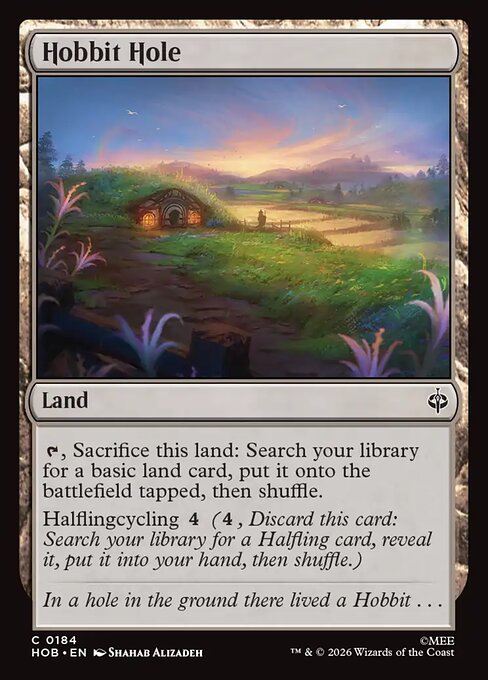
Check black first. Black's commons, Crude Bent Blade and Bilbo's Deadly Slice, usually go around pick 3 or 4, so one still in the pack at pick 6 or later says black is open. Check blue second, where Bilbo Baggins, Burglar and Enchanted River's Grasp normally go around pick 6 or 7, and Plunder the Trollshaws, Long Lake Nuisance and Uneasy Partings a little later. If they keep coming at picks 8 to 10, nobody next to you is blue. If white cards flow along with blue, Draw Two (white-blue) is the better blue deck at 56.4% over 58,594 games.

Common mistakes

  • Forcing Removal Control. It trails the other black decks (53.2% over 12,745 games against Goblin Army 57.6% over 85,459 games, Ferocious Wolves 56.9% over 57,277 games and Removal Midrange 56.8% over 4,805 games). Start with black's and take the second color the packs give you.

  • Drafting Draw Two's blue cards as if they work the same here. Lakeshore Apothecary (52.7% here, 58.7% in Draw Two), Master's Councillors and Ravenhill Flock reward many extra draws, and this deck has fewer of them. Take and creatures that block well instead.

  • Playing black's aggressive cards in a deck that wants to block. Gollum the Abandoned can't block, Dreaded Bat-Cloud's discount needs a creature to die that turn, and Nighthowl Pursuer's bonus needs a creature with 4 or more power. This deck rarely has one, so Nighthowl drops from 60.1% in Goblin Army to 55.2% here.

  • Too few creatures. A deck full of and card draw still needs 15–17 creatures to block early and to finish the game. Count a as half a creature at most. If you're short in pack 3, take Front Porch Sentries or Patient Instructor over another draw spell.

  • Wasting and discards. While you still need land drops, keep the lands and throw away a spell, which on a recruit also gets you the Soldier. Once you have five or six lands, the extra lands go. Never discard to make a .

  • Misreading the . Six of the deck's cards are : Bilbo, Luckwearer; Bilbo Baggins, Burglar; Gollum, Silent Slinker; Thranduil, Sindarin Liege; Thrór's Map and Gollum the Abandoned. You can't keep two with the same name on the battlefield, so a second copy is much weaker. Different names are fine, so both Bilbos can be on the battlefield at the same time.

Better or worse in this deck